
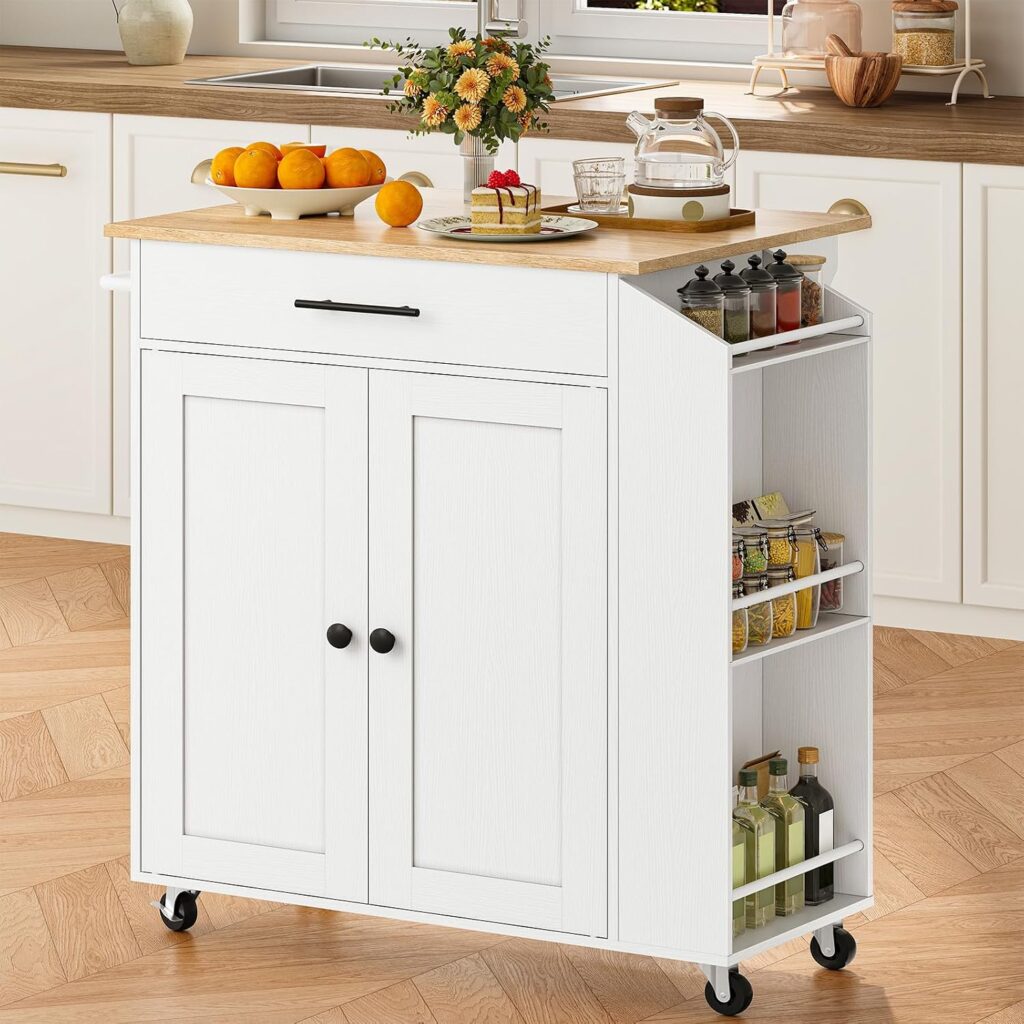


HOOBRO Kitchen Island with Drop Leaf: A Rolling Kitchen Island Cart for Flexible Kitchen Space
A kitchen island can add valuable workspace, storage, and a natural gathering point to a kitchen, but not every kitchen has the floor space to accommodate a permanent fixture. The HOOBRO Kitchen Island with Drop Leaf, Rolling Kitchen Island Cart on Wheels is designed around that exact problem. Its combination of a drop-leaf work surface and a wheeled base suggests a piece of furniture intended to adapt to the room rather than dominate it. This review takes a closer look at what the product information tells us about how it is built and how it might fit into everyday kitchen life.
Design and Build Approach
The most distinctive design element here is the drop leaf. A drop-leaf surface is a hinged extension that can be raised when extra workspace is needed and folded down when it is not. On a kitchen island, that matters because it allows the footprint of the unit to change depending on the task at hand. When the leaf is down, the cart occupies a narrower profile; when it is up, the working surface expands. The product name identifies it specifically as a drop-leaf design, so this is a core part of its identity rather than an optional add-on.
The second defining design choice is the wheeled base. The cart is described as a rolling kitchen island cart on wheels, which means it is built to be moved rather than fixed in place. That opens up possibilities that a stationary island cannot offer: the cart can be positioned where it is needed for prep work and then rolled aside when the kitchen needs to be cleared. It also means the island is not tied to a single spot in the room, which can be useful in open-plan layouts or kitchens with limited permanent counter space.
Because the supplied information does not include dimensions, weight capacity, or specific materials, those details are best confirmed directly on the product listing before purchase. What can be said with confidence is that the design concept centers on adaptability: a surface that changes size and a base that changes location.
Features and Practical Functionality
Beyond the headline features, the product is categorized as a kitchen island, which places it in the broader family of kitchen furniture designed to supplement existing countertops. A kitchen island cart of this type typically serves as a secondary work zone, and the drop-leaf mechanism is the feature that makes that role flexible. In a smaller kitchen, the ability to fold the surface away is often the difference between a piece that fits and one that does not.
The rolling design also has practical implications for how the cart is used. Moving a work surface to the ingredients, rather than carrying ingredients to a fixed counter, can reduce back-and-forth movement during meal preparation. That is a direct consequence of the wheels, not an additional claim about the product’s performance. Similarly, a cart on wheels can be repositioned for different activities throughout the day, whether that means prepping near the stove or clearing the floor afterward.
It is worth noting that the product information does not specify whether the wheels include locking casters, what the wheel material is, or how the drop leaf is supported when raised. These are details that affect day-to-day use, and they should be verified from the listing rather than assumed. The absence of that information in the source material does not mean the features are missing; it simply means they cannot be confirmed here.
Performance and Everyday Experience
How a kitchen island cart performs in practice depends heavily on how it is used, and the HOOBRO design points toward a few clear scenarios. The drop leaf makes the cart suitable for tasks that need a larger temporary surface, such as chopping vegetables, rolling dough, or laying out ingredients before cooking. When those tasks are finished, folding the leaf down returns the cart to a more compact state.
The wheeled base supports a workflow where the cart moves between zones. In a kitchen where the main counter is occupied, the cart can serve as an overflow station. In a dining area or open living space, it can be rolled in to hold serving dishes or drinks. These are reasonable uses given the stated design, though the exact capacity and stability of the cart would depend on specifications not provided in the source information.
Because the product is a kitchen island rather than a fixed cabinet, it is also worth considering how it interacts with existing furniture. A rolling cart can be tucked against a wall or beside a counter when not in use, which is consistent with the space-saving intent of the drop-leaf design. Again, the specific clearance needed would depend on dimensions that are not included in the supplied details.
Assembly, Care, and Compatibility
The supplied information does not describe assembly requirements, tools needed, or care instructions for this kitchen island cart. Products in this category are often shipped flat and assembled at home, but that cannot be confirmed from the source material, so it is best treated as an open question. Similarly, there is no information about the finish, surface treatment, or recommended cleaning method.
What the information does establish is the product type and its two key functional attributes: a drop-leaf surface and a wheeled base. Anyone considering this cart should check the listing for dimensions, weight limits, material details, and assembly information to confirm it suits their space and needs.
Who Is This Kitchen Island Cart Best For?
Based on the stated design, this product is a natural fit for anyone who wants the function of a kitchen island without committing to a permanent installation. That includes renters who cannot modify a kitchen, homeowners with compact kitchens where a fixed island would block movement, and anyone who regularly rearranges a multi-purpose room. The drop leaf supports users who need extra workspace only occasionally, while the wheels suit those who want a surface that can be repositioned rather than fixed.
It is less obviously suited to anyone looking for a large, permanently installed island with a fixed countertop, since the defining features here are mobility and a folding surface. The product is also not described as a storage-heavy unit in the supplied information, so buyers whose priority is extensive built-in organization should verify what storage the cart actually provides.
Final Verdict
The HOOBRO Kitchen Island with Drop Leaf, Rolling Kitchen Island Cart on Wheels is built around two ideas that work well together: a work surface that expands when needed and a base that moves where it is needed. For kitchens where space is tight or layouts change frequently, that combination addresses a real limitation of fixed islands. The design is straightforward and the intent is clear from the product name alone.
The main caveat is that the supplied information covers the concept rather than the specifics. Dimensions, materials, weight capacity, wheel details, and assembly requirements are not included, and those are exactly the details that determine whether a cart fits a particular kitchen. Buyers should confirm those points on the listing before deciding. Taken on its stated design, however, this rolling drop-leaf island cart offers a flexible approach to adding workspace without permanently giving up floor space.