
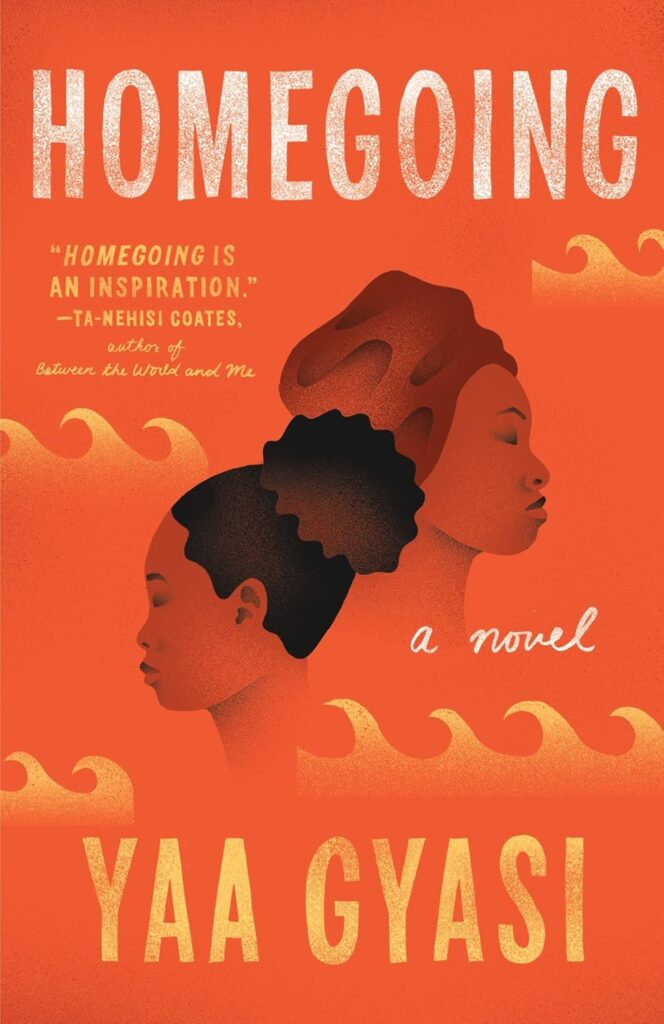


Homegoing by Yaa Gyasi: A Multigenerational Novel of Slavery’s Long Shadow
Yaa Gyasi’s Homegoing is a work of historical fiction that has drawn considerable recognition since its publication, including the National Book Critics Circle’s John Leonard Prize and the PEN/Hemingway Award for Debut Fiction. The novel is also an international bestseller and was named one of Oprah’s Best Books of the Year. For readers interested in Black and African American historical fiction, family sagas, or multigenerational narratives, this book offers a structure and scope that sets it apart from more conventional historical novels.
What Homegoing Is About
The novel opens in eighteenth-century Ghana, where two half sisters are born into different villages, each unaware of the other’s existence. Their lives diverge sharply. One sister marries an Englishman and lives in comfort within the palatial rooms of the Cape Coast Castle. The other is captured in a raid on her village, imprisoned in that same castle, and sold into slavery.
From this starting point, Homegoing follows the parallel paths of the two sisters and their descendants across eight generations. The narrative moves from the Gold Coast to the plantations of Mississippi, and from the American Civil War to Jazz Age Harlem. Through this sweeping structure, the novel examines slavery’s troubled legacy for both those who were taken and those who remained, and it explores how the memory of captivity has been inscribed on the soul of the nation.
Structure and Narrative Approach
The most distinctive aspect of Homegoing is its multigenerational architecture. Rather than following a single protagonist through a continuous storyline, the novel traces two family lines that branch outward from the two half sisters. Each generation introduces new characters and settings, creating a chain of connected stories that spans centuries and continents.
This structure places the book firmly within the family saga and multigenerational fiction categories. Readers who appreciate novels that move across wide stretches of time and geography will find that the format allows Gyasi to explore how historical forces echo through individual lives. The parallel structure also means the novel continually returns to the contrast between the two sisters’ fates, even as the story moves far beyond their immediate circumstances.
Historical Scope and Setting
The settings in Homegoing are integral to its identity as historical fiction. The novel begins on the Gold Coast of West Africa, moves through the American South during the era of slavery and the Civil War, and continues into Jazz Age Harlem. This range allows the book to engage with different phases of Black history across two continents.
The publisher’s description emphasizes that the novel illuminates slavery’s troubled legacy both for those who were taken and those who stayed. That dual perspective is central to the book’s approach: it does not treat the African and American experiences as separate stories, but as connected branches of the same family history. The result is a narrative that considers the long-term consequences of the transatlantic slave trade on multiple generations.
Edition Details and Physical Format
This edition of Homegoing is published by Vintage as a reprint, with a publication date of May 2, 2017. It is an English-language paperback with 320 pages. The ISBN-10 is 1101971061 and the ISBN-13 is 978-1101971062. The book’s dimensions are listed as 5.17 x 0.68 x 7.91 inches, and its item weight is stated as 2.31 pounds.
These physical specifications place the book in a standard trade paperback format. The dimensions suggest a relatively compact trim size that should be manageable for holding during extended reading sessions, though individual preferences for book size vary. The page count of 320 is worth noting given the novel’s eight-generation scope; the structure requires the narrative to move efficiently between characters and time periods.
Reception and Recognition
Homegoing has received several notable distinctions. In addition to being an international bestseller, it won the National Book Critics Circle’s John Leonard Prize and the PEN/Hemingway Award for Debut Fiction. It was also selected as one of Oprah’s Best Books of the Year. These awards and selections reflect the book’s standing in contemporary literary fiction, particularly for a debut novel.
The book has also appeared on bestseller lists in several categories, including Black & African American Historical Fiction, Family Saga Fiction, and Multigenerational Fiction. These categorizations align with the novel’s content and structure, and they may help readers understand where the book fits within the broader literary landscape.
Who Is This Book Best For?
Based on the subject matter and structure described by the publisher, Homegoing is likely to appeal to readers who are drawn to historical fiction that engages directly with the history of slavery and its aftermath. The novel’s focus on both the African and American sides of the story may interest readers who want a perspective that considers the experiences of those who were taken as well as those who remained.
Readers who enjoy family sagas and multigenerational narratives will find that the eight-generation structure offers a broad canvas. The book’s movement across the Gold Coast, Mississippi, and Harlem means it touches on multiple historical periods, which may suit readers who appreciate fiction that spans significant stretches of time rather than focusing on a single era.
Because the novel follows two family lines across many generations, readers who prefer a single continuous protagonist may find the shifting focus unusual. However, those who appreciate interconnected stories and historical sweep are more likely to connect with the book’s approach. The awards and recognition the novel has received may also make it of interest to readers who follow prize-winning literary fiction and debut authors.
Final Verdict
Homegoing is a multigenerational historical novel that traces two family lines from eighteenth-century Ghana through the American South and into Jazz Age Harlem. Its structure, which follows eight generations descended from two half sisters, allows Yaa Gyasi to explore slavery’s legacy from multiple perspectives and across a wide historical span. The book’s recognition—including the National Book Critics Circle’s John Leonard Prize, the PEN/Hemingway Award for Debut Fiction, and selection as one of Oprah’s Best Books of the Year—reflects its standing in contemporary literary fiction.
For readers interested in Black and African American historical fiction, family sagas, or multigenerational narratives, Homegoing offers a substantial and wide-ranging reading experience. The 320-page paperback edition from Vintage presents the novel in a standard trade format. Whether the book suits a particular reader will depend on their interest in historical fiction that moves across generations and continents, and their openness to a narrative structure that shifts between characters and time periods rather than following a single continuous storyline.