
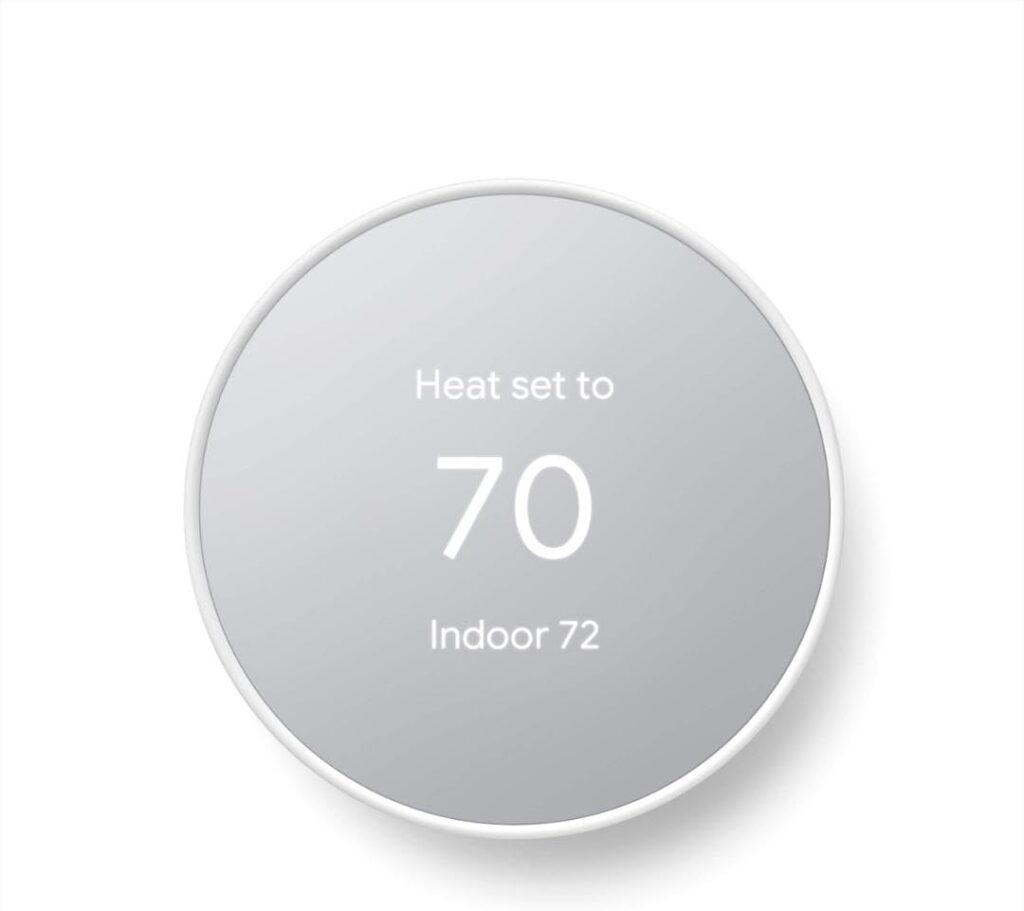


Google Nest Thermostat – Smart Thermostat for Home – Programmable WiFi Thermostat – Snow
The Google Nest Thermostat is a smart thermostat for the home that combines programmable scheduling with app-based control and a set of energy-focused features. It is positioned as an accessible entry point into the Nest ecosystem, offering the core conveniences people expect from a connected thermostat without requiring a complicated installation process. This review looks at what the Nest Thermostat is designed to do, how it is meant to be installed, and which households are most likely to benefit from its particular set of capabilities.
Design and Installation
The model covered here is the Snow colorway, a clean white finish that suits a wide range of interior styles. Beyond the color, the most practical design consideration is installation. Google states that the Nest Thermostat is designed to be installed yourself, usually in 30 minutes or less. That matters for anyone who wants to avoid scheduling a technician for a straightforward swap.
Wiring compatibility is the detail worth understanding before buying. The Nest Thermostat is designed to work if your home does not have a common (“C”) wire. However, the source information notes that in some cases a C wire or another power-supply accessory may be necessary. This is more likely if you have a heating-only or cooling-only system, or if you use a zone controller. Heat pump systems are also listed among the setups where a C wire or compatible power accessory is needed. Google provides an online Nest Compatibility Checker on its support page, which is a sensible first step before purchasing so you can confirm your system is supported.
Features and Technology
The central idea behind the Nest Thermostat is that it can turn itself down when you leave, so you are not spending energy heating or cooling an empty home, and it returns to a comfortable setting when you come back. This away-and-return behavior is the foundation of its energy-saving approach.
Scheduling is handled through the Google Home app, where you can program an energy-efficient schedule. The app is available for Android and iPhone, and it also allows remote control from a phone, laptop, or tablet, so family members can adjust the temperature from anywhere. Remote control and mobile notifications require a working internet connection and Wi-Fi.
Savings Finder is another feature worth noting. It looks for additional ways your thermostat can help you save and suggests tweaks to your schedule within the app. The source also advises checking with your energy provider about rebates and other ways to save on a Nest thermostat, which suggests that local utility programs may complement the thermostat’s own suggestions.
HVAC monitoring is included as well. The thermostat watches over your heating and cooling systems and can send an alert if something does not seem right, along with reminders intended to make maintenance easier. It is important to frame this accurately: alerts can notify you of a potential issue with eligible HVAC systems, and they are meant to provide helpful information rather than an endorsement, representation, or warranty about the health of your system. They are not intended to replace a diagnosis by a qualified HVAC professional.
Voice control is supported through smart home devices that work with Google Assistant or Alexa, and the thermostat is compatible with Google Assistant and all Matter-certified voice assistants. Voice control requires a compatible smart device along with working internet and Wi-Fi.
On the energy side, the Nest Thermostat is an ENERGY STAR certified smart thermostat. ENERGY STAR and the ENERGY STAR mark are registered trademarks owned by the U.S. Environmental Protection Agency. The product information also references Nest Renew, a program that works with your Nest Thermostat to help automatically prioritize usage to times when energy is cleaner or less expensive. Nest Renew requires a third-generation Nest Learning Thermostat, Nest Thermostat E, or the newest Nest Thermostat connected to a Google account, and it is only available in areas served by major continental US grids and for customers on certain electric utility time-of-use rates. Adjustments under this program only shift electricity usage from your heating and cooling rather than reducing total consumption.
Connectivity and Compatibility
The Nest Thermostat connects over Wi-Fi, supporting 802.11b/g/n on 2.4 GHz and 802.11a/n on 5 GHz. It also uses Bluetooth Low Energy for wireless interconnect. The connectivity protocol is listed as Wi-Fi.
Compatibility extends across smart home platforms. The thermostat can be controlled with Google Home and other smart home platforms, and it works with Google Assistant and all Matter-certified voice assistants. This gives households some flexibility in how they integrate the thermostat with devices they already own, provided those devices meet the requirements for voice control.
One notable omission in the supplied information is a lock feature, which is listed as not included. If restricting physical or app-based temperature changes is important in your household, that is a limitation to keep in mind.
Everyday Experience
In daily use, the Nest Thermostat is built around a few simple interactions. You set a schedule in the Google Home app, let the thermostat manage away periods on its own, and adjust the temperature remotely when plans change. The remote control capability means someone can change the temperature from a phone, laptop, or tablet rather than walking to the wall unit, which is convenient for households with multiple family members managing comfort.
The HVAC monitoring and maintenance reminders add a layer of awareness, though the alerts are informational and not a substitute for professional diagnosis. Savings Finder provides ongoing suggestions rather than one-time setup, which means the thermostat’s energy guidance can evolve as your usage patterns become clearer.
Who Is This Product Best For?
This thermostat suits households that want app-based scheduling and remote temperature control without moving to a higher-tier Nest model. It is a reasonable fit for people who prefer a self-install and whose systems are confirmed compatible through Google’s compatibility checker.
It is also a practical option for homes without a C wire, since the thermostat is designed to work in that situation in most homes, though heating-only, cooling-only, zone-controlled, and heat pump systems may still require a C wire or compatible power accessory. Households interested in voice control through Google Assistant, Alexa, or Matter-certified assistants will find support here, provided they have compatible devices and working internet. Those who want to participate in Nest Renew should verify both their thermostat model and their utility’s eligibility before assuming access.
Final Verdict
The Google Nest Thermostat in Snow is a smart thermostat that focuses on the essentials: self-installation, app-based scheduling, remote control, away-based energy adjustments, HVAC monitoring alerts, and broad voice assistant compatibility. Its ENERGY STAR certification and Savings Finder suggestions reinforce its energy-conscious positioning, while the C-wire flexibility makes it easier to adopt in many homes.
The caveats are worth weighing. Some system types may need a C wire or power accessory, HVAC alerts are informational only, Nest Renew has specific model and utility requirements, and there is no lock feature. For buyers who confirm compatibility and want a straightforward programmable Wi-Fi thermostat with Google’s ecosystem behind it, the Nest Thermostat presents a coherent, well-defined option.