


Philips Hue Bridge Pro Smart Lighting Hub, 1-Pack
The Philips Hue Bridge Pro is the control hub at the center of a Philips Hue smart lighting setup. Where individual Hue bulbs and fixtures handle the actual light, the Bridge is the component that ties them together, manages the network, and unlocks the features that go beyond simple on-and-off control. This 1-pack version is the latest generation of that hub, and it arrives with a set of upgrades that position it as a more capable foundation for a growing smart home.
If you already own Hue devices, the Bridge Pro is the piece that determines how much of the system you can actually use. If you are starting fresh, it is the component that makes the rest of the ecosystem work as intended. Understanding what it does, and what has changed compared to earlier Hue hubs, is the key to deciding whether it belongs in your setup.
Design & Build Quality
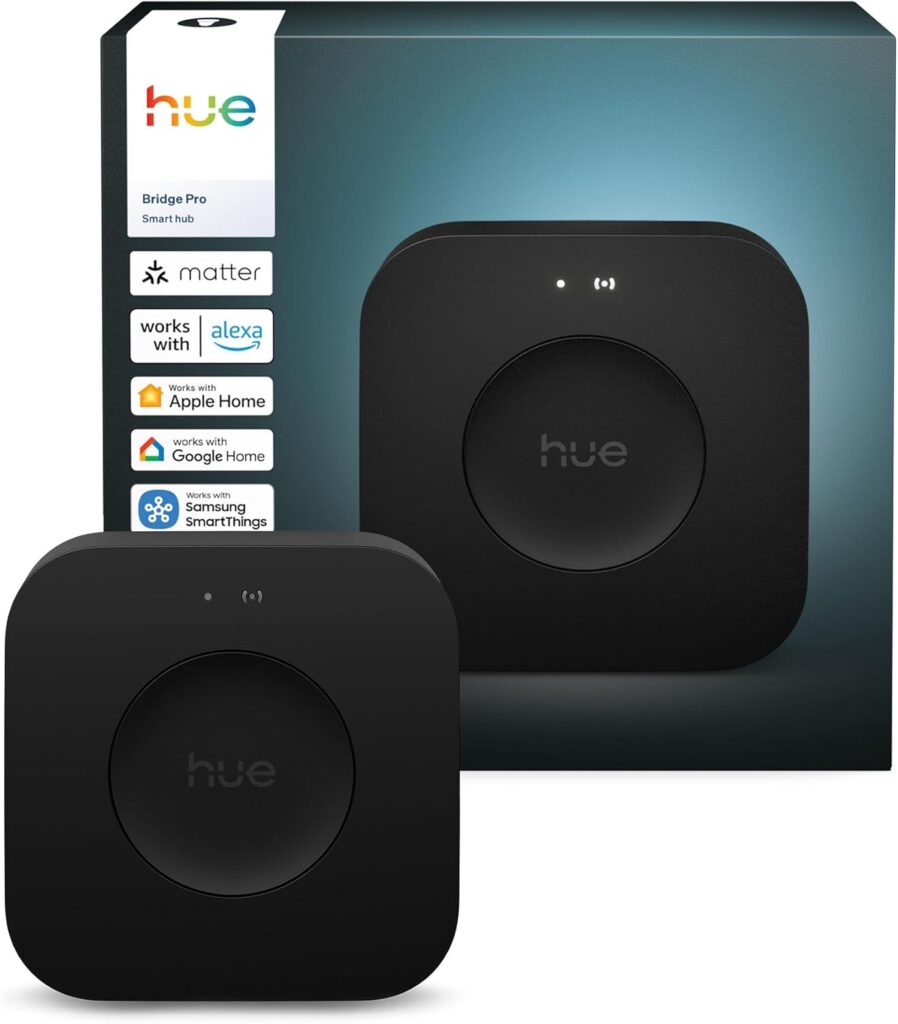
The most immediately noticeable change in the Bridge Pro is that it is now wireless. Earlier Hue Bridges needed to be physically connected to a router, which often meant tucking the hub away near the router rather than placing it where it made the most sense for the home. The Bridge Pro removes that constraint, so it can be placed anywhere rather than being tethered to a specific spot near networking equipment.
That flexibility matters more than it might first appear. A hub that can be positioned freely is easier to integrate into a room, a cabinet, or a central location in the home without worrying about cable runs back to the router. The 1-pack configuration supplies a single Bridge Pro, which is the standard setup for a single-home Hue system.
Features & Technology
Inside the Bridge Pro is the Hue Chip Pro, built around a quad-core Cortex-A35 CPU running at 1.7 GHz. Philips describes this as an ultra-fast chip capable of running complex algorithms and AI-powered features. That processing headroom is what allows the hub to handle a larger and more demanding installation than earlier generations.
Memory has also been expanded significantly. The Bridge Pro carries 4 GB of DDR4 SDRAM, which Philips states provides 15x more memory than before, along with faster data transfers. In practical terms, that additional memory is what supports the storage of up to 500 personalized scenes and automations. For anyone who likes to build out detailed lighting routines, that capacity is a meaningful part of the hub’s appeal.
Capacity itself has grown as well. The Bridge Pro supports 150+ lights and 50+ accessories. Philips also notes that existing Hue devices can be migrated to the new Bridge, which means an established Hue household does not necessarily have to start over when moving to this generation.
Connectivity is handled through Zigbee, which Philips describes as a mesh network. One stated benefit of this approach is that the lights can continue to work even when the Wi-Fi is down. The hub is also Matter-certified and is stated to connect with smart home assistant platforms including Apple Home, Alexa, Google, and Samsung SmartThings.
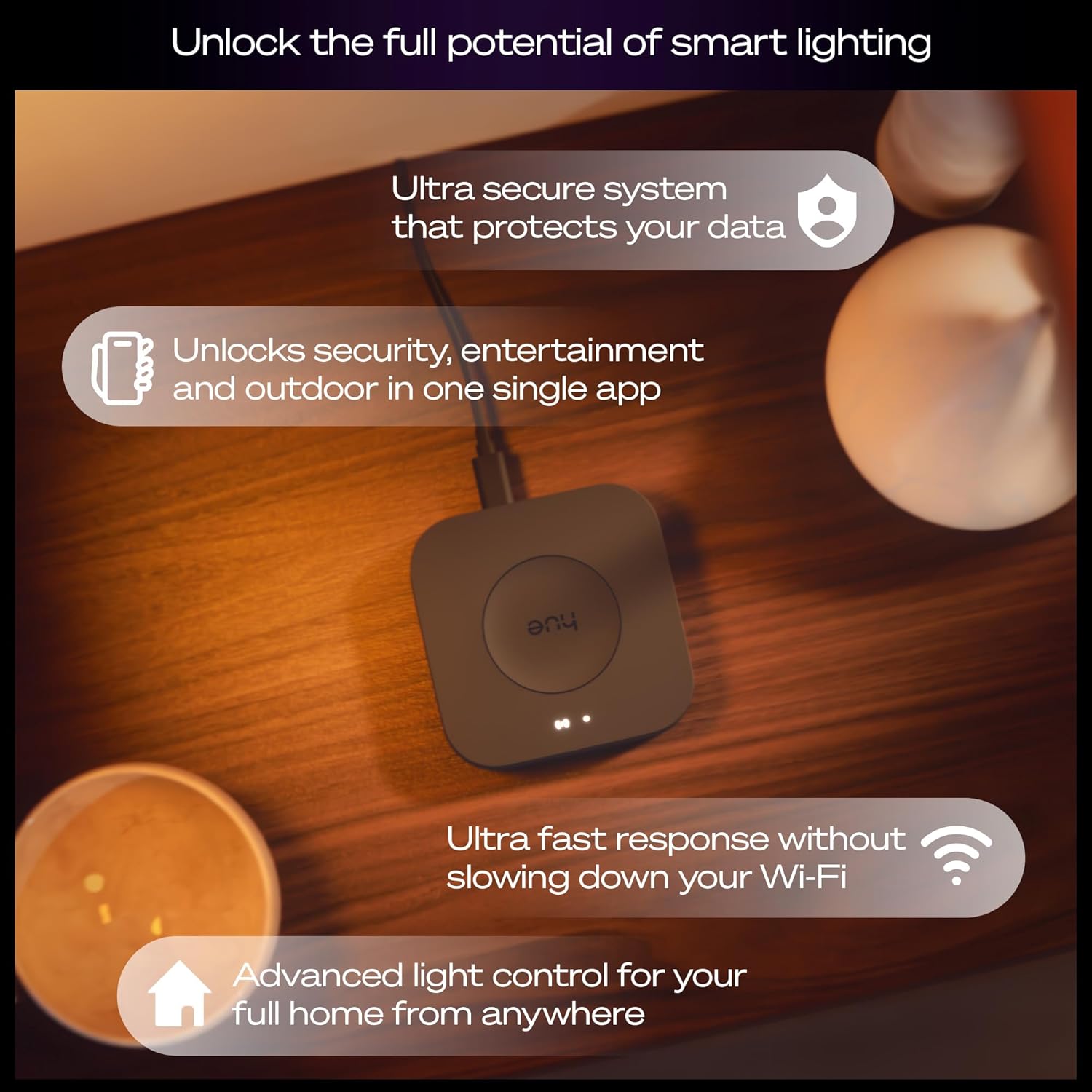
Security is addressed through what Philips calls the new Zigbee Trust Center, which is intended to prevent unauthorized access. The company describes the system as ultra secure and focused on protecting data and privacy through enhanced security controls.
MotionAware and Scene Control
One of the more distinctive additions to this generation is Hue MotionAware. According to the supplied information, this technology allows Hue lights to be programmed to switch on automatically when movement is detected. What makes it notable is that it does not require separate motion sensors. Instead, it relies on having three Hue devices in place.
That is a different approach to motion-based lighting than adding dedicated sensors around the home. For households that already have several Hue devices installed, the hardware requirement may already be satisfied, which makes the feature more accessible than it might otherwise be.
Scene and automation storage ties directly into the expanded memory. With room for up to 500 personalized scenes and automations, the Bridge Pro is built to accommodate a system that grows over time rather than one that stays small and simple.
Performance & Everyday Experience
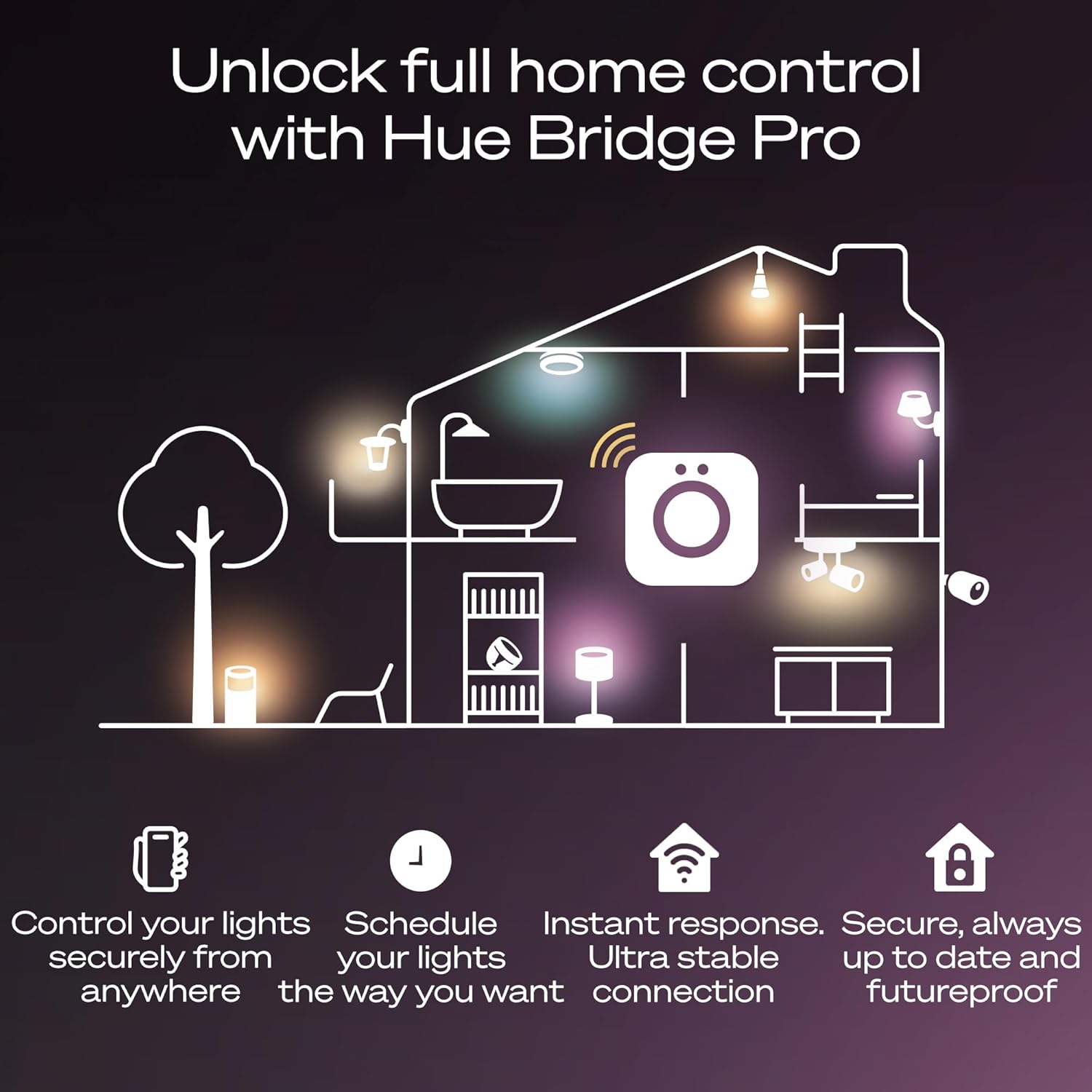
Philips states that response time is instant, so lights can be controlled without delays. The combination of the 1.7 GHz quad-core processor and the expanded DDR4 memory is presented as the reason the hub can keep up with a larger installation while still responding quickly.
The wireless design also changes the everyday experience in a subtle way. Because the hub is no longer tied to a router location, it can be placed where it is convenient. Meanwhile, the Zigbee mesh approach means the lighting system is not dependent on Wi-Fi to keep functioning, which is a meaningful distinction for anyone who has experienced a home network outage and watched connected devices go dark.
Control while away is another stated capability, along with the ability to set automations. Combined with compatibility for Matter and the major smart home platforms, the Bridge Pro is positioned as a hub that can sit at the center of a broader connected home rather than operating as an isolated lighting controller.
Connectivity & Compatibility
The Bridge Pro is Matter-certified and is stated to work with Apple Home, Alexa, Google, and Samsung SmartThings. That range of platform support means the hub can be integrated into a variety of smart home environments rather than being limited to a single ecosystem.
Zigbee serves as the underlying technology for the lighting network, forming a mesh that Philips says allows lights to keep working even when Wi-Fi is unavailable. The hub also uses the Zigbee Trust Center for security, which is described as a measure to prevent unauthorized access to the system.
For existing Hue owners, migration of current devices to the new Bridge is supported, which is worth noting for anyone weighing an upgrade rather than a first purchase.
Who Is This Product Best For?
The Bridge Pro makes the most sense for households that are committed to the Philips Hue ecosystem and want the features that depend on a hub. That includes motion-based automation through MotionAware, large scene and automation libraries, and integration with Matter and the major smart home platforms.
It is also a natural fit for larger installations. With support for 150+ lights and 50+ accessories, the Bridge Pro is aimed at setups that go well beyond a few bulbs in a single room. Existing Hue users with a substantial number of devices are another clear audience, particularly since device migration is supported.
For someone with only a small number of Hue lights and no interest in automations, motion sensing, or platform integration, the case for a hub is less obvious, since those are the capabilities it enables.
Final Verdict
The Philips Hue Bridge Pro is a substantial generational update to the Hue hub. The move to a wireless design removes the router tether, the Hue Chip Pro with its 1.7 GHz quad-core CPU and 4 GB of DDR4 SDRAM supports a larger and more demanding system, and the expanded capacity of 150+ lights and 50+ accessories gives the hub room to grow. MotionAware adds motion-based lighting without requiring separate sensors, provided three Hue devices are in place, and the Zigbee Trust Center addresses security.
Matter certification and support for Apple Home, Alexa, Google, and Samsung SmartThings make it a flexible centerpiece for a connected home, while Zigbee mesh operation means the lighting system is not reliant on Wi-Fi. For Hue households with a growing device count or an interest in automation and motion sensing, the Bridge Pro is a well-specified foundation. For very small setups, its strengths may go unused.