


LeapFrog Shapes and Sharing Picnic Basket Review
The LeapFrog Shapes and Sharing Picnic Basket is a pretend-play toy that combines a classic picnic theme with interactive electronic learning. Designed for children from 6 months to 4 years old, it aims to introduce concepts such as colors, shapes, and manners through hands-on play. Rather than being a simple basket of play food, this toy incorporates a shape sorter, spoken prompts, songs, and lights, turning a familiar activity into a guided learning experience.
This review looks at what the toy includes, how its interactive elements are intended to work, and what parents and caregivers can reasonably expect based on the product information provided.
Design and What’s Included
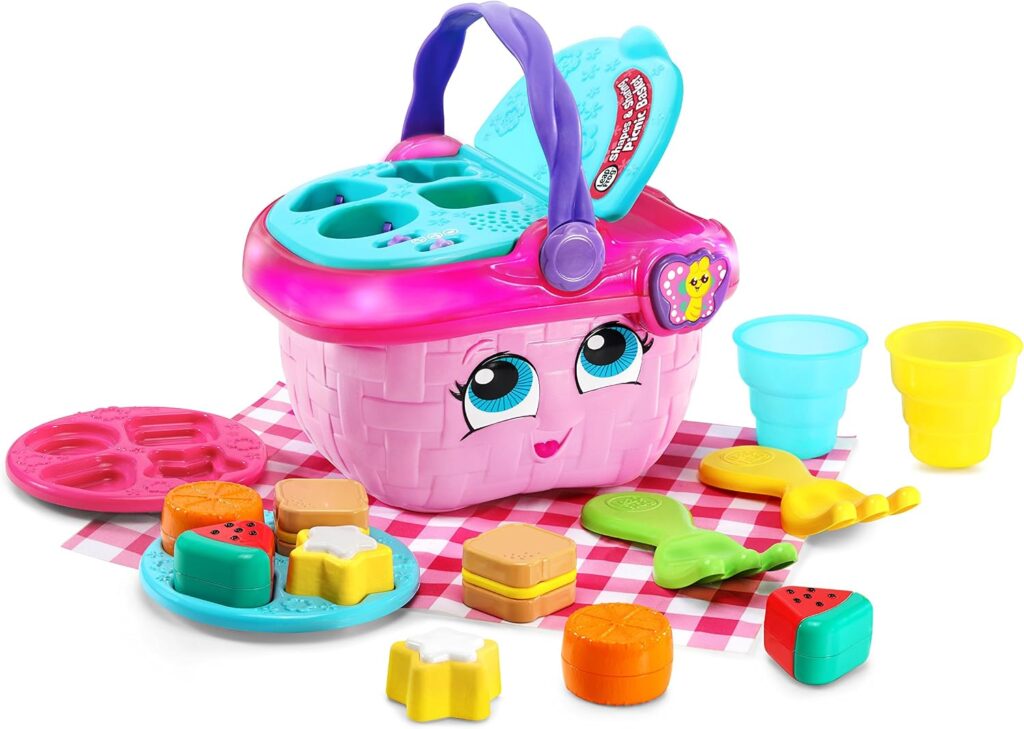
The core of the product is a picnic basket that doubles as a storage container. All of the included play pieces fit inside the basket, which helps keep the set together between play sessions. The basket also lights up, adding a visual element to the interactive responses.
The set comes with 15 brightly colored play pieces. These include plates, forks, cups, food items, and a tablecloth. According to the product information, the pieces are intended to support a pretend picnic for two, which gives the set a natural social-play angle. Two children, or a child and a caregiver, can share the roles of setting out plates, handing out food, and taking turns.
The basket features a lid that can be lifted. Lifting the lid triggers cheerful phrases, which means the act of opening the basket is itself part of the play. The interactive shape sorter is built into the lid, and this is where much of the learning activity takes place.
Features and Technology
The shape sorter is the central interactive feature. It recognizes the food pieces when they are placed into it and announces the shape and color of each one. This turns a standard shape-matching task into a talking activity, where the toy responds to what the child does rather than simply waiting for a correct answer.
A butterfly button on the basket provides another layer of interaction. Pressing it plays music or delivers polite snack requests. This is how the manners theme is introduced: the basket asks for food in a courteous way, and the child responds by choosing a piece and feeding it to the basket.
The product offers three play modes: music, shapes and colors, and picnic time. Each mode shifts the focus of the interaction. The music mode centers on songs, the shapes and colors mode emphasizes naming and matching, and the picnic time mode builds around the pretend-meal scenario and the polite requests. Having three modes means the same basket can be used in different ways as a child’s interests and abilities change.
When the correct food piece is dropped into the basket, the toy provides rewarding responses that are described as encouraging good manners. This feedback loop—listen, choose, place, and hear a response—is the basic structure of the play.
Performance and Everyday Experience
In practical terms, this is a toy that rewards participation. The shape sorter only responds when a piece is placed, the butterfly button only responds when pressed, and the lid phrases only play when the lid is lifted. That means the child drives the experience rather than passively watching it. For a toy aimed at children as young as 6 months, this hands-on quality is central to how it holds attention.
The learning content is woven into the picnic theme rather than presented as a separate lesson. Colors and shapes come up through the food pieces and the sorter. Manners come up through the polite requests and the rewarding responses. Music and songs provide a lighter, more open-ended mode for times when structured matching is not what the child wants.
Because the play pieces store inside the basket, cleanup is part of the toy’s design rather than an afterthought. The tablecloth and the serving pieces also support the pretend-picnic setup, so the set can move between a structured learning activity and open-ended pretend play.
One practical consideration is the number of pieces. With 15 play pieces, there is enough variety to keep the picnic scenario interesting, but it also means pieces can end up scattered. The basket’s storage function helps here, though it depends on pieces being returned to it.
Battery and Age Information
The picnic basket requires 3 AA batteries. Batteries are included, but the product information notes that these are for demo purposes only and that new batteries are recommended for regular use. This is worth planning for, since the interactive features—phrases, songs, shape and color announcements, and lights—all depend on battery power.
The toy is intended for ages 6 months to 4 years. That is a broad range, and the three play modes are consistent with it. Younger children can engage with the music, the lights, and the simple cause-and-effect of pressing the butterfly button or lifting the lid. Older children within the range can work on matching shapes, naming colors, and following the picnic-time requests.
Who Is This Product Best For?
This toy is suited to families with children in the stated 6-month to 4-year age range. It is particularly relevant for caregivers who want a pretend-play toy that also carries some early learning content, since the shape sorter and the color and shape announcements are built directly into the picnic theme.
It also fits situations where two children play together, given that the included pieces are described as supporting a pretend picnic for two. The sharing and turn-taking elements align naturally with that setup.
Because the toy relies on spoken prompts, songs, and lights, it is best suited to households comfortable with an electronic, battery-powered toy rather than a purely wooden or silent play set. The three modes give it some flexibility for different moods and attention spans within the intended age range.
Final Verdict
The LeapFrog Shapes and Sharing Picnic Basket packs a lot into a familiar format. It takes the idea of a pretend picnic and adds a shape sorter that names shapes and colors, a butterfly button that plays music and polite snack requests, three distinct play modes, and a light-up basket that stores all 15 pieces.
The manners angle is handled through the toy’s requests and its rewarding responses, which gives the play a social dimension beyond simple matching. The age range is wide, and the multiple modes help the toy grow with a child rather than being limited to a single stage.
The main things to keep in mind are the battery requirement—3 AA batteries, with the included set intended for demo use only—and the fact that the interactive features depend on that power. For families looking for a picnic-themed toy that combines pretend play with early learning on shapes, colors, and manners, this set offers a structured but flexible option within its stated age range.