


Fisher-Price Baby’s First Blocks: A Classic Shape-Sorting Toy for Little Learners
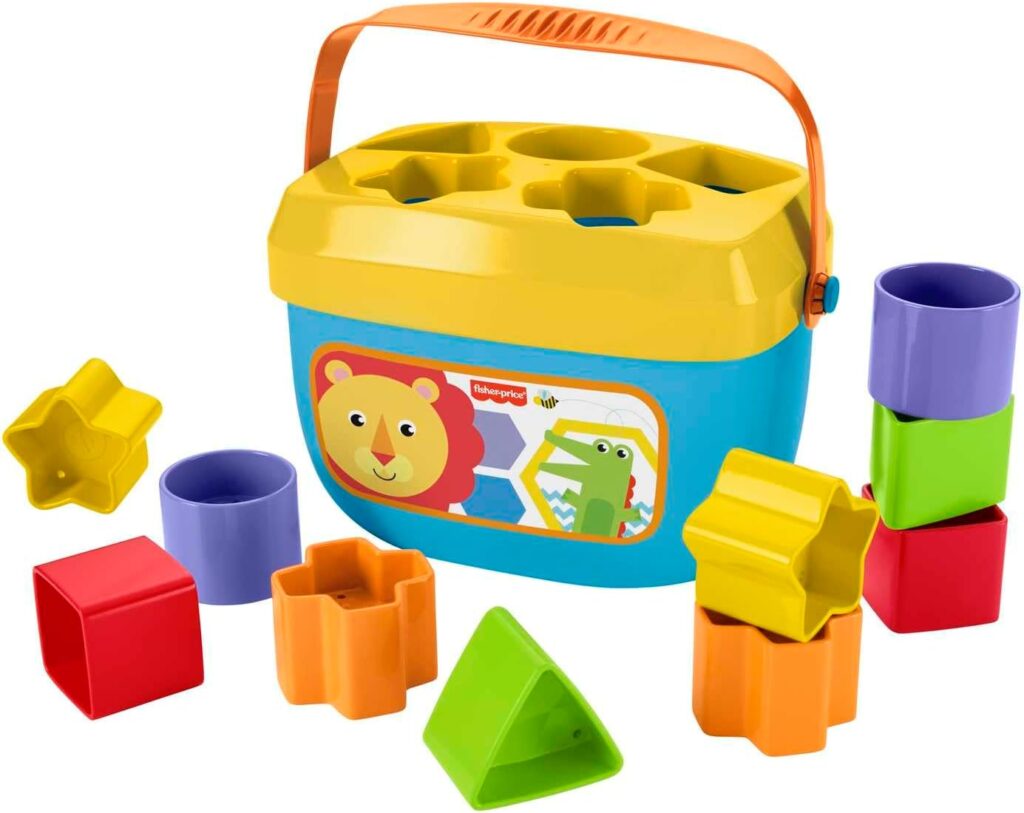
When it comes to toys for babies, simplicity often wins. The Fisher-Price Baby’s First Blocks set is a straightforward concept: a bucket, a lid with shaped slots, and ten colorful blocks. There are no lights, no sounds, and no screens—just the satisfying, hands-on work of picking up a block, figuring out where it goes, and dropping it through the correct opening. For parents looking for a traditional, engaging toy that grows with a child’s developing skills, this set offers a familiar and time-tested approach to play.
Design & Build Quality
The design of Baby’s First Blocks is built around a simple, durable-looking plastic bucket. The blocks themselves are described as chunky, which is an important detail for little hands that are still mastering the art of gripping and releasing objects. Their size makes them easier for a baby to hold compared to smaller, more intricate pieces, which is a thoughtful consideration for the 6+ months age range.
The bucket lid functions as the shape sorter. It features slots that correspond to the shapes of the blocks, allowing a child to match each piece to its proper opening. When playtime is over, the design offers a practical solution: all ten blocks fit inside the bucket for storage. This means the entire toy can be consolidated into one contained unit, which is a small but meaningful convenience for parents trying to keep a play area tidy or pack a bag for a trip.
Portability is further addressed with an easy-carry handle on the bucket. This handle makes it simple for a caregiver to tote the toy from room to room or to a destination outside the home. It also gives older toddlers a way to carry their own toy, adding a sense of independence to the play experience. The combination of a storage-friendly bucket and a carry handle positions this as a toy that can easily move between home, daycare, or a grandparent’s house.
Features & Technology
This is a toy that deliberately avoids technology. The features are purely physical and mechanical, focusing on the fundamentals of shape recognition and motor skills. The set includes ten blocks in a variety of colors and shapes. The specific shapes are not detailed in the product information, but the inclusion of a shape-sorter lid indicates that the pieces are designed to correspond to the cutouts on the bucket.
The play pattern is refreshingly open-ended. A baby can engage with the blocks in several ways:
- Sorting: Matching each block to its corresponding slot on the lid.
- Stacking: Piling the blocks on top of one another on a flat surface.
- Dropping: Releasing blocks through the slots into the bucket below.
Once all the blocks are inside, the fun isn’t over. The lid can be removed so the bucket can be emptied, and the process can start all over again. This repetitive cycle is exactly the kind of activity that supports a young child’s learning, as mastery comes through repeated practice. The toy’s lack of electronic features means it relies entirely on the child’s own actions and curiosity, which can be a welcome change of pace in a market filled with battery-operated gadgets.
Performance & Everyday Experience
In everyday use, the Fisher-Price Baby’s First Blocks set offers a multi-layered play experience. For a younger baby around six months old, the initial appeal may be the blocks themselves. Grasping a chunky block, transferring it from one hand to another, and exploring its texture are all valuable activities. The bright, colorful appearance of the blocks is designed to capture a baby’s visual attention and spark curiosity.
As the child grows, the play becomes more intentional. The shift from simply holding a block to attempting to push it through a specific slot marks a significant developmental milestone. This is where the toy begins to support hand-eye coordination. The child must look at the block, look at the lid, and then coordinate the movement of their hand to guide the block into the correct position. The trial-and-error involved in figuring out that a square block won’t fit through a round hole is a practical lesson in problem-solving.
The act of dropping the block through the slot and watching it land in the bucket is often highly engaging for babies. It provides immediate, tangible feedback for their actions. When the bucket is full, the child can dump it out and start again, which also introduces the concept of cause and effect. For parents, the easy-carry handle and the fact that all pieces store inside the bucket make cleanup and transport simple, encouraging more frequent use of the toy in different settings.
Developmental Benefits & Suitability
The stated purpose of this toy goes beyond simple entertainment. The product information highlights several developmental benefits that are directly tied to the play activities. The grasping, sorting, and stacking actions are all cited as ways to help strengthen a baby’s hand-eye coordination and dexterity. These are foundational motor skills that will serve a child well as they grow.
Furthermore, the toy is designed to introduce babies to colors and shapes. This is an early cognitive skill, and the physical act of matching shapes helps reinforce the visual recognition of those shapes. The problem-solving aspect comes into play as the child figures out how to make each block fit through the correct slot. This combination of physical and cognitive challenges makes the toy suitable for a range of developmental stages within the infant and toddler years.
The age recommendation of 6 months and older is a helpful guideline. At the younger end of this range, babies are often just developing the fine motor skills needed to grasp and hold objects. The chunky size of the blocks is appropriate for this stage. As children approach their first birthday and beyond, they are typically better able to understand the sorting concept and may begin to match shapes with greater accuracy. The toy’s simple design allows it to remain relevant and engaging as the child’s abilities progress.
Who Is This Product Best For?
This toy is clearly aimed at babies and toddlers aged 6 months and older. It is best suited for children who are beginning to explore objects with their hands and are showing an interest in putting things into containers. For a baby who is just starting to sit up and grasp at toys, the chunky blocks are an ideal size for little hands to hold and mouth (as babies often do).
It is also a fitting choice for parents who value toys that encourage independent, screen-free play. The toy requires no setup and no adult assistance to operate, though adult supervision and interaction can certainly enhance the experience. A caregiver can talk about the colors and shapes, narrate the sorting process, or simply let the child explore at their own pace. This makes it a versatile option for a playdate, a quiet afternoon at home, or a travel activity, thanks to the portable bucket design.
Given its focus on foundational skills, it is also a practical gift for a baby shower or a first birthday. It offers a classic play pattern that has remained popular for generations, suggesting a broad and enduring appeal for children in this age group.
Final Verdict
The Fisher-Price Baby’s First Blocks set delivers a classic, no-frills play experience that is thoughtfully designed for early development. Its core strengths lie in its simplicity and its direct alignment with the motor and cognitive skills that babies are developing at 6 months and beyond. The chunky blocks are easy for small hands to manage, and the shape-sorting lid offers a clear, achievable challenge that encourages problem-solving.
The practical design elements, such as the storage-friendly bucket and the easy-carry handle, add to its appeal for parents, making it easy to keep organized and take on the go. While it does not offer the bells and whistles of more modern electronic toys, its value is in the fundamental, hands-on learning it promotes. For those seeking a straightforward, developmental toy that introduces colors and shapes while fostering fine motor skills, this set is a solid and sensible option. It is a toy that a child can return to again and again, finding new ways to play as their skills evolve.