

Pop Up Toys for 1 Year Old Boys and Girls: An Interactive Cause-and-Effect Learning Toy
Toys aimed at one-year-olds occupy a tricky space. They need to be simple enough for small hands and short attention spans, yet engaging enough to hold interest beyond a single afternoon. The Pop Up Toys for 1 Year Old Boys and Girls, an interactive cause-and-effect learning toy, approaches this challenge with a familiar format: a panel of hidden animals that appear when a child works the controls in front of them. What sets this version apart is the addition of electronic play modes that layer animal names, sounds, and a light-following game on top of the basic pop-up mechanic.
This review looks at what the toy offers based on the manufacturer’s stated information, how its modes work, and which children are likely to get the most from it.
Design and Build
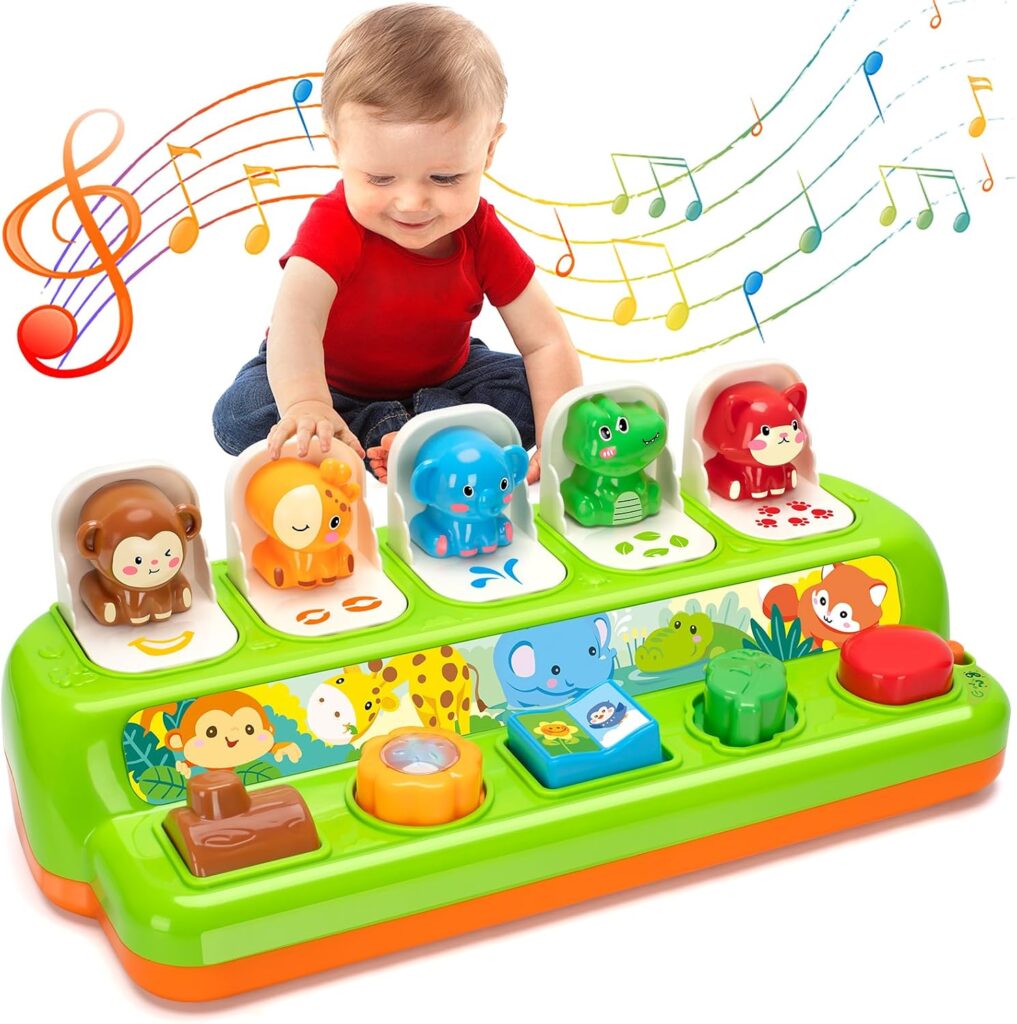
The toy is built around a set of animal characters that pop up when a child activates the lever, switch, dial, or button positioned in front of each one. That variety of controls matters more than it might first appear. Each control type asks for a slightly different hand movement, so the toy presents several small physical challenges within a single play session rather than repeating one motion.
According to the manufacturer, the body is made from ABS material that has been polished smooth and finished burr-free. The same source describes the material as non-toxic and BPA-free and positions the toy within a brand line of “safe learning toys” for ages one and up. These are stated product claims rather than independently verified results, but they give a clear picture of how the toy is positioned for parents who prioritize material safety in early toys.
The design is described as easy to grasp and tap, with the stated aim of strengthening babies’ hand muscles. The pop-up action itself is the core of the experience: a child works a control, an animal appears, and the connection between action and result becomes visible.
Features and Play Modes
This upgraded version includes three distinct play modes, which is the most significant departure from a basic mechanical pop-up toy.
- Animal sound mode: When an animal pops up, the toy plays the relevant animal name and its sound. This pairs the visual surprise with language and audio, reinforcing recognition of each animal.
- Game mode: A light-following activity in which the child moves the button to find the hidden animals. This adds a guided challenge for children who have already mastered the basic controls.
- Quiet mode: The animals still pop up without batteries, with no music. This allows the mechanical cause-and-effect play to continue in situations where sound is unwanted.
One practical detail worth noting: batteries are not included. The quiet mode is also a useful reminder that the toy’s core pop-up function does not depend on power at all, so the mechanical play remains available regardless of whether batteries are installed.
Learning and Development
The manufacturer frames this as an educational multi-development toy, and the stated goals line up with the way the toy works. Because each animal appears only after a specific control is activated, the toy naturally teaches cause and effect: a child learns that a particular action produces a particular result. The mix of levers, switches, dials, and buttons supports fine motor skills, while the pop-up surprises are intended to encourage natural curiosity and exploration.
The music and animal sounds are described as a way to spark interest, and the combination of reaching, pressing, watching, and listening touches on hand-eye coordination as well. For a one-year-old, that layering of sensory input and physical action is the heart of the toy’s appeal.
Everyday Experience
In daily use, the toy’s three modes give it a longer runway than a single-function pop-up panel. A younger toddler can start with quiet mode, focusing purely on the physical controls and the animals appearing. As familiarity grows, animal sound mode adds names and sounds to the mix, turning each pop into a small language moment. Game mode then offers a more directed activity for children ready to follow the lights and search out the hidden animals.
The quiet mode also makes the toy easier to fit into different parts of the day. It can be used without batteries and without music, which is a practical option for quieter play periods or for households that prefer to limit electronic sound. Because the sound features depend on batteries that are not included, parents should plan accordingly if they want to use the audio modes right away.
Gift Suitability
The manufacturer presents this pop-up cause-and-effect toy as a gift option for boys or girls, specifically naming birthday parties and festivals including Easter, Christmas, Halloween, Thanksgiving, and New Year. The age guidance of one year and up, combined with the toy’s focus on motor development and early learning, makes it a reasonable candidate for a first-birthday or holiday gift for a toddler. The multiple modes also mean the toy can grow with a child’s abilities to some degree, which is a useful quality in a gift.
Who Is This Toy Best For?
Based on the stated information, this toy suits families looking for an interactive learning toy for a child aged one and up. It is particularly relevant for parents who want a cause-and-effect toy that combines physical controls with optional sound and music, and for those who value a quiet, battery-free play option alongside the electronic modes. It also fits gift-givers searching for a birthday or festival present for a toddler boy or girl.
Households that prefer entirely screen-free, battery-free toys may still find value in quiet mode, while families comfortable with sound features can make use of the animal sound and game modes. Parents should simply note that batteries must be purchased separately to access the audio functions.
Final Verdict
The Pop Up Toys for 1 Year Old Boys and Girls takes a well-established toddler toy concept and expands it with three play modes, animal names and sounds, and a light-following game. Its stated material claims—smooth, burr-free, non-toxic, and BPA-free ABS—address a common parental concern, and the variety of controls gives young children several different physical challenges to master. The quiet mode is a thoughtful inclusion that keeps the toy usable without batteries or music.
It is not a complicated toy, and that is appropriate for its age range. What it offers is a clear, hands-on way for toddlers to learn cause and effect while building fine motor skills, with electronic features that can be introduced as a child’s abilities develop. For parents seeking an interactive learning toy for a one-year-old, this is a well-considered option worth including on a shortlist.