
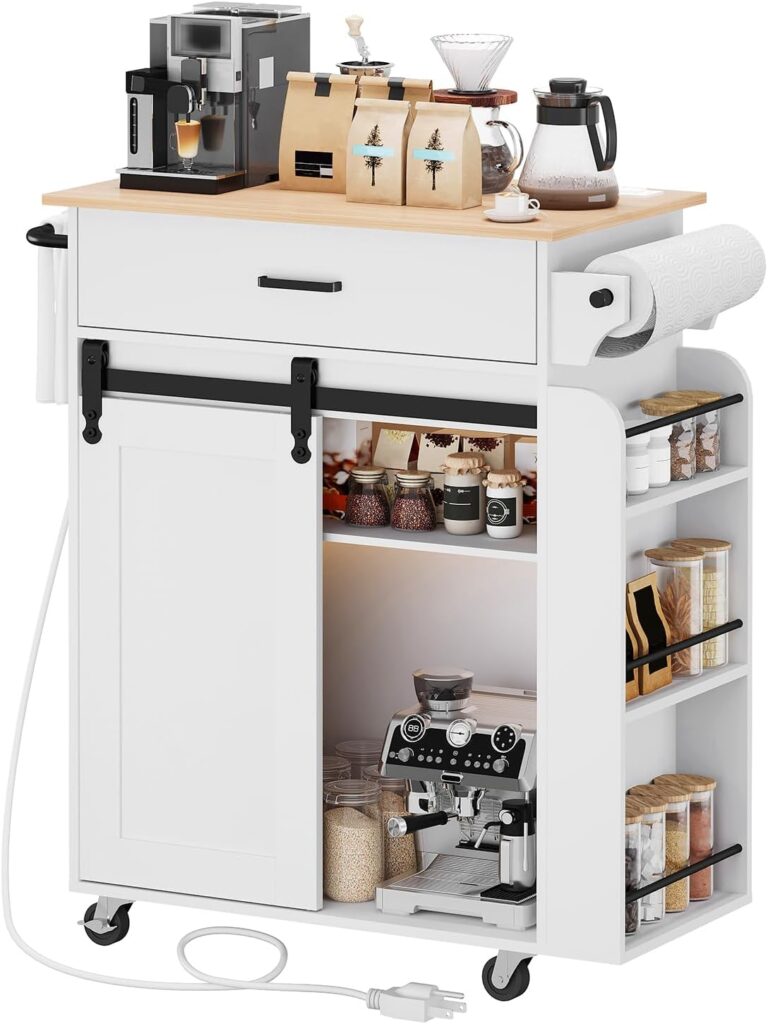


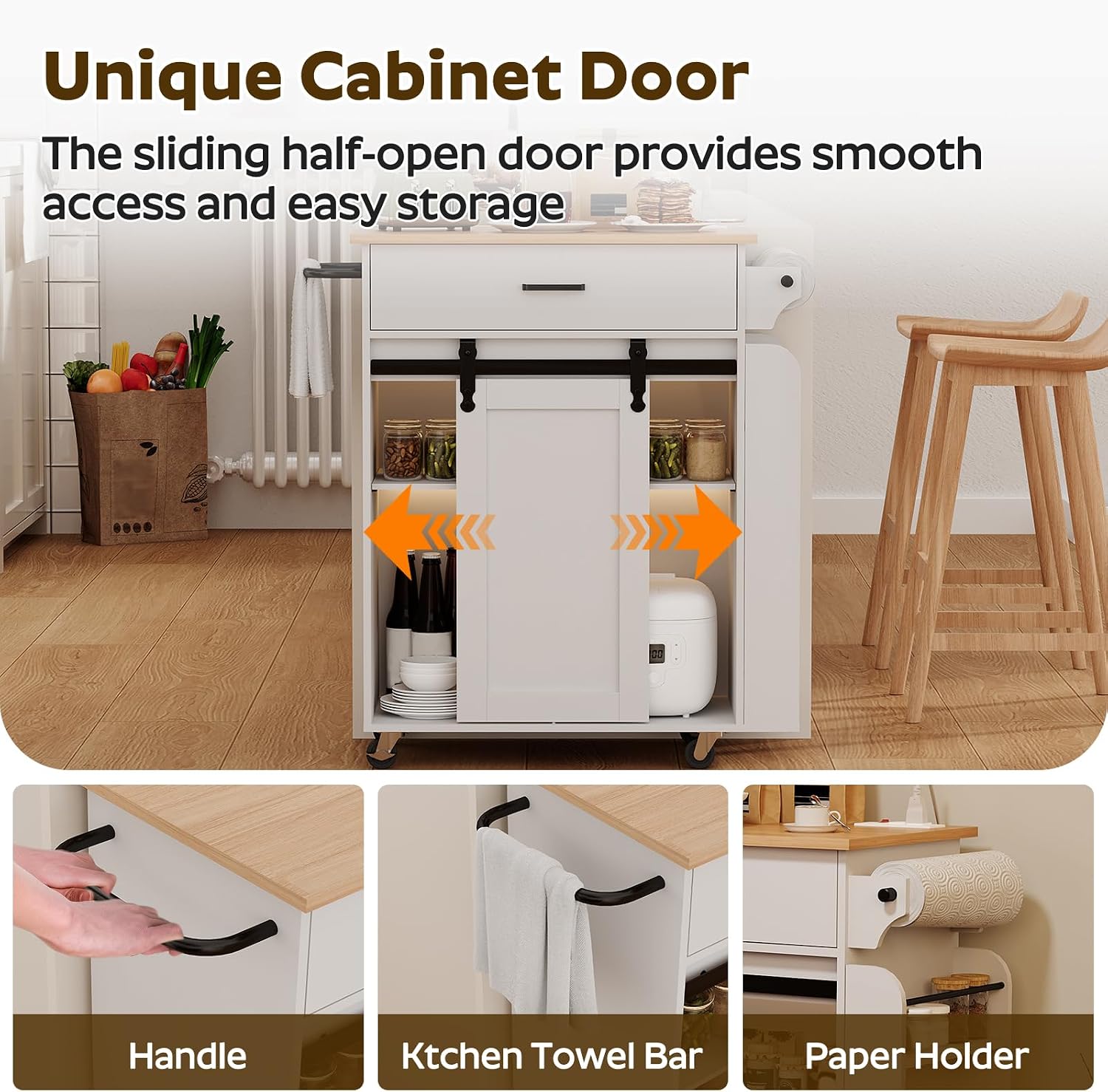


YATINEY Kitchen Island with Storage: A Mobile Kitchen Cart With a Built-In Charging Station
Kitchen space is rarely as generous as we would like it to be. Counters fill up quickly, small appliances compete for outlets, and the one surface you actually need for chopping vegetables is usually buried under something else. The YATINEY Kitchen Island with Storage approaches that problem from two directions at once: it adds a movable work surface with organized storage underneath, and it builds a charging station directly into the cart so devices and small electronics have a dedicated place to draw power. For anyone working with a compact kitchen, a rental, or a layout that simply does not offer enough built-in cabinetry, this is the kind of piece that tries to solve several everyday problems in a single footprint.
Design and Build Concept
The core idea behind this unit is mobility. It is described as a mobile kitchen cart, which means it is built to be moved rather than fixed in place. That single design decision shapes how the product is used. A stationary island has to be planned around — once it is installed, the kitchen layout is essentially locked in. A mobile cart can be rolled to wherever the work is happening, then moved back out of the way when the floor needs clearing or when the room is being used for something other than cooking.
Because the cart is designed to move, it functions as a flexible extension of the existing counter rather than a permanent architectural addition. That makes it relevant to kitchens where a full island is not realistic, whether because of square footage, an awkward floor plan, or the fact that the space is rented and cannot be modified. The storage component is integrated into the same structure, so the cart is not just a rolling table — it is intended to hold kitchen items as well as provide a surface to work on.
The product name also identifies it as a kitchen island with storage, which suggests the unit is meant to serve in the same role a fixed island would, just in a form that can be repositioned. The two functions — work surface and storage — are presented together rather than as separate features, which is consistent with how the cart is described.
Features and Technology
The most distinctive element in the supplied product information is the charging station. This is not a common addition to a kitchen cart, and it changes what the unit can do. Instead of treating the cart purely as furniture, the charging station makes it a power source as well, which is useful in a room where outlets are limited or poorly placed.
In practical terms, a built-in charging station means devices can be powered or recharged at the cart itself rather than through a wall outlet across the room. That could apply to a phone or tablet being used for recipes, or to small kitchen electronics that need power while in use. The supplied information identifies the charging station as a feature of the cart but does not specify the number of ports, the type of ports, the power output, or whether the station includes USB connections, standard outlets, or both. Those details are not stated, so they should be confirmed against the listing before purchase if they matter for a specific setup.
Storage is the other defining feature. The cart is described as having storage, but the source material does not detail the configuration — whether that means open shelving, enclosed compartments, drawers, or a combination. What can be said is that storage is part of the design intent, so the cart is meant to hold items rather than simply offer a flat top. For a kitchen short on cabinet space, that distinction matters, because it determines whether the cart reduces clutter or just adds another surface to pile things on.
Everyday Use and Practical Considerations
The value of a mobile cart shows up in the small moments of cooking. A surface that can be pulled alongside the stove creates extra room for prep without requiring a permanent installation. When the meal is finished, the same cart can be pushed aside, which keeps walkways clear in a tight kitchen. This is the practical logic of a mobile design, and it is directly supported by the product being described as a mobile kitchen cart.
The charging station fits into that same everyday pattern. Kitchens tend to accumulate devices — phones propped up for recipes, tablets, small appliances — and a cart with its own power source gives those items a defined home. Rather than trailing a cable across the counter to reach an outlet, the power is available where the work is happening. That is a reasonable practical implication of a built-in charging station, though the exact capabilities depend on specifications not provided in the source material.
Storage works alongside both of these functions. A cart that holds items keeps the top surface available for actual work, which is the point of adding storage to a mobile unit in the first place. The combination of a movable surface, on-board storage, and a charging station suggests a product designed for kitchens where space is at a premium and every piece of furniture needs to earn its place.
Compatibility and Setup Considerations
The supplied information does not include dimensions, weight capacity, material details, assembly requirements, or the specific devices the charging station is compatible with. Those are meaningful details for a piece of kitchen furniture, particularly for anyone measuring a tight space or planning to charge a particular device. Because the source does not state them, they are best verified directly rather than assumed.
What the information does establish is the product category and its primary functions: a kitchen island with storage, a mobile cart format, and an integrated charging station. Those three elements define what the product is and how it is intended to be used, even without the finer specifications.
Who Is This Product Best For?
Based on the stated features, this cart suits anyone who needs additional kitchen surface area but cannot add a permanent island. That includes renters, people in small apartments, and anyone whose kitchen layout leaves no room for fixed cabinetry. The mobile design is the key qualification here — if the cart needs to move, the format makes sense; if it does not, a stationary unit might serve equally well.
The charging station points toward users who want power available at the work surface, whether for phones, tablets, or small electronics used during cooking. And the storage component is relevant to anyone trying to reduce counter clutter without adding wall cabinets. The product is not presented as a replacement for full kitchen cabinetry, but as a flexible addition to a space that needs more function from the same footprint.
Final Verdict
The YATINEY Kitchen Island with Storage is a practical concept built around three connected ideas: mobility, storage, and on-board power. The mobile cart format lets it serve as an extension of the counter without committing to a permanent installation, the storage element gives it a purpose beyond being a rolling surface, and the charging station addresses the reality that kitchens have become a place where devices need power. The supplied information does not cover dimensions, materials, port types, or assembly, so those details remain open and should be checked against the listing for anyone with specific requirements. As a space-saving kitchen addition, the design logic is clear and the feature set is coherent — it is a cart meant to work harder than a simple table, and for the right kitchen, that combination is exactly what is needed.