
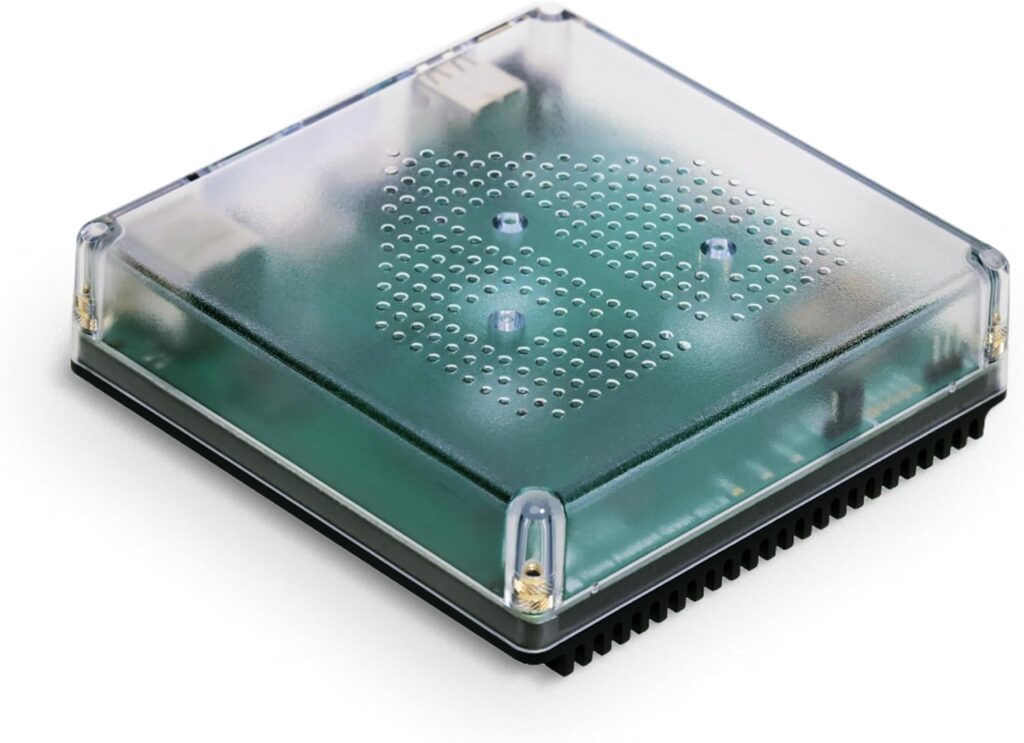


Home Assistant Green: A Straightforward Smart Home Hub
Home Assistant has long been a name associated with flexible, locally controlled smart homes, but getting started with it has traditionally required a certain appetite for tinkering. Home Assistant Green is the official hardware designed to change that. It arrives with Home Assistant already installed, so the setup process is reduced to plugging in the included power supply and Ethernet cable. For anyone who has wanted to try Home Assistant but felt put off by the initial technical hurdle, this device is aimed squarely at that gap.
This is official Home Assistant hardware, built and supported by Nabu Casa, the team driving the development of Home Assistant itself. That matters because it means the hardware and the software come from the same source, rather than being a third-party box running community software. Below is a closer look at what the device offers, what its specifications mean in practice, and who is likely to get the most out of it.
Design and Build Approach
Home Assistant Green is described as small, fanless, and silent. Those three characteristics work together in a way that suits a device meant to sit quietly in a home. A fanless design means there is no spinning fan inside the chassis, which is the reason the unit is described as silent. For a hub that may live on a shelf, in a media cabinet, or near a router, the absence of fan noise is a practical detail rather than a marketing flourish.
The compact footprint also fits the role. A smart home hub is infrastructure — it needs to be present and running, but it does not need to draw attention to itself. The small form factor supports that idea, making it easier to place without rearranging a space around it.
Hardware and Features
Inside, Home Assistant Green packs a quad-core processor, 32GB of storage, and 4GB of RAM. These are the components that allow the hub to run Home Assistant and handle the automation workload that comes with it. The storage provides room for the Home Assistant installation and the data associated with a smart home setup, while the memory supports the software running on top of the hardware.
One of the stated benefits is consolidation: the device is positioned as one hub to control the whole home, cutting down on hub and app clutter. Instead of managing multiple apps and bridges, the idea is to bring control into a single place. That is a meaningful shift for households that have accumulated a collection of separate smart devices, each with its own app.
USB expandability is another feature worth noting. If more connectivity is needed, Home Assistant Green can be expanded with Z-Wave, Zigbee, and Thread USB devices. This is an important detail because it means the hub’s wireless capabilities are not fixed at purchase. Those protocols are listed as optional expansions rather than built-in radios, so anyone planning to use Z-Wave, Zigbee, or Thread devices would need to add the appropriate USB hardware. The base unit itself is not described as including those radios.
Automation and Everyday Use
The core purpose of Home Assistant Green is automation. The product information gives concrete examples: having lights dim when a movie starts, or turning off the heat when you are away from home. These illustrate the kind of cross-device coordination that a hub like this is built for. Rather than controlling each device in isolation, the goal is to make the devices in a home work in harmony.
This is where a central hub differs from a collection of standalone smart products. Automations that span multiple device types — lighting, climate, and others — depend on a system that can see and coordinate them together. Home Assistant Green is presented as that coordinating layer, with advanced automation as a headline capability.
Because Home Assistant is already installed, the path from unboxing to a working setup is short. Plugging in the power supply and the Ethernet cable is the entire stated startup requirement. That simplicity is the point of this particular model: it removes the installation step that has historically been a barrier for newcomers.
Connectivity and Data Control
Setup relies on a wired Ethernet connection, which is included in the box along with the power supply. This is a notable design choice, since it means the hub does not depend on Wi-Fi for its network connection. For a device that needs to stay reliably online to run automations, a wired connection is a sensible foundation, and it is the connection method the product describes for getting started.
Data handling is another area the product addresses directly. The stated approach is that your home’s data is kept in the home on your Green. The device also allows you to view, share, and export that data wherever you want. This local-first positioning is central to the Home Assistant philosophy, and it is one of the reasons some users prefer this ecosystem over cloud-dependent alternatives. The emphasis is on keeping control of the data rather than handing it off by default.
Power Efficiency
Home Assistant Green is described as power efficient, using only a couple of watts of power. Since a hub of this kind is intended to run continuously, low power draw is a relevant consideration. A device that stays on around the clock will consume energy over time, so a design that sips rather than gulps power fits the always-on role well. The product frames this as the “Green” way to run Home Assistant, which ties the name to the efficiency claim.
Who Is This Product Best For?
Home Assistant Green is best suited to people who want to get started with Home Assistant without a complicated installation process. The pre-installed software and the simple plug-in setup make it a natural entry point for newcomers to the platform.
It is also a good fit for households dealing with hub and app clutter. If you have accumulated several smart devices across different apps and want to bring them under one roof, the consolidation pitch applies directly. Similarly, anyone who values keeping home data local, with the ability to view, share, and export it, will find that aspect relevant.
Finally, users who anticipate needing Z-Wave, Zigbee, or Thread connectivity should note that these require optional USB devices. Those who plan to build out a multi-protocol smart home will want to factor in that expansion path, while those sticking to the base setup can start with the unit as shipped.
Final Verdict
Home Assistant Green is a focused piece of hardware with a clear purpose: making Home Assistant easier to adopt. By shipping with the software already installed and requiring only power and Ethernet to get going, it lowers the barrier that has kept some people away from the platform. The official backing from Nabu Casa adds a layer of alignment between hardware and software that matters for long-term support.
The quad-core processor, 32GB of storage, and 4GB of RAM give it the foundation to run automations, while the fanless, silent, small design lets it blend into a home. Local data control and low power draw round out a package that is consistent with what Home Assistant stands for. The main caveat is connectivity: Z-Wave, Zigbee, and Thread are optional USB expansions rather than built-in, so buyers should plan accordingly.
For anyone wanting a straightforward, officially supported way into Home Assistant and a single hub to coordinate a smart home, Home Assistant Green presents a coherent and practical option.