




GE Smart Scale for Body Weight: A Full-Body Composition Analyzer With 50+ Metrics
Stepping on a bathroom scale used to answer exactly one question: how much do you weigh? The GE Smart Scale for Body Weight takes a different approach. It is a full-body composition analyzer that uses an eight-electrode array and dual-frequency, segmental bioelectrical impedance analysis (BIA) to estimate far more than a single number. According to the product information, it reports more than 50 body composition metrics, and it is built to support long-term trend tracking rather than one-off readings. For anyone who wants a broader picture of body composition without visiting a clinic, this scale is designed to put that data at your feet — literally.
Design and Build
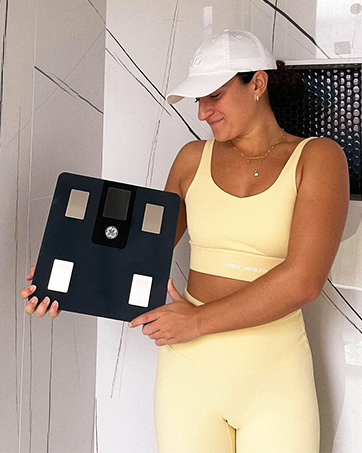
The scale has a large weighing surface measuring 12.2 in × 13.2 in × 1.3 in (310 × 336 × 33.8 mm). That generous footprint matters for a device that asks you to stand in a specific position: the eight electrodes need contact with both feet and hands to segment the body, so a wider platform gives you room to settle into place. The listing describes it as suitable for personal or gym use, and the size supports that framing — it is not a slim travel scale, but a fixture for a bathroom or training space.
The product information does not detail materials, weight, or finish, so those specifics are best confirmed elsewhere. What is clear is the overall form factor: a flat platform with an integrated display, designed to be stepped on barefoot so the electrodes can do their job.
Features and Technology
The core of this scale is its eight-electrode, dual-frequency, segmental BIA system. Rather than treating the body as one uniform mass, it segments the body into five sections — the four limbs and the torso — to produce what the listing describes as more detailed, consistent body composition estimates for trend tracking. That segmentation is the reason the scale can report regional and whole-body figures instead of a single impedance-derived percentage.
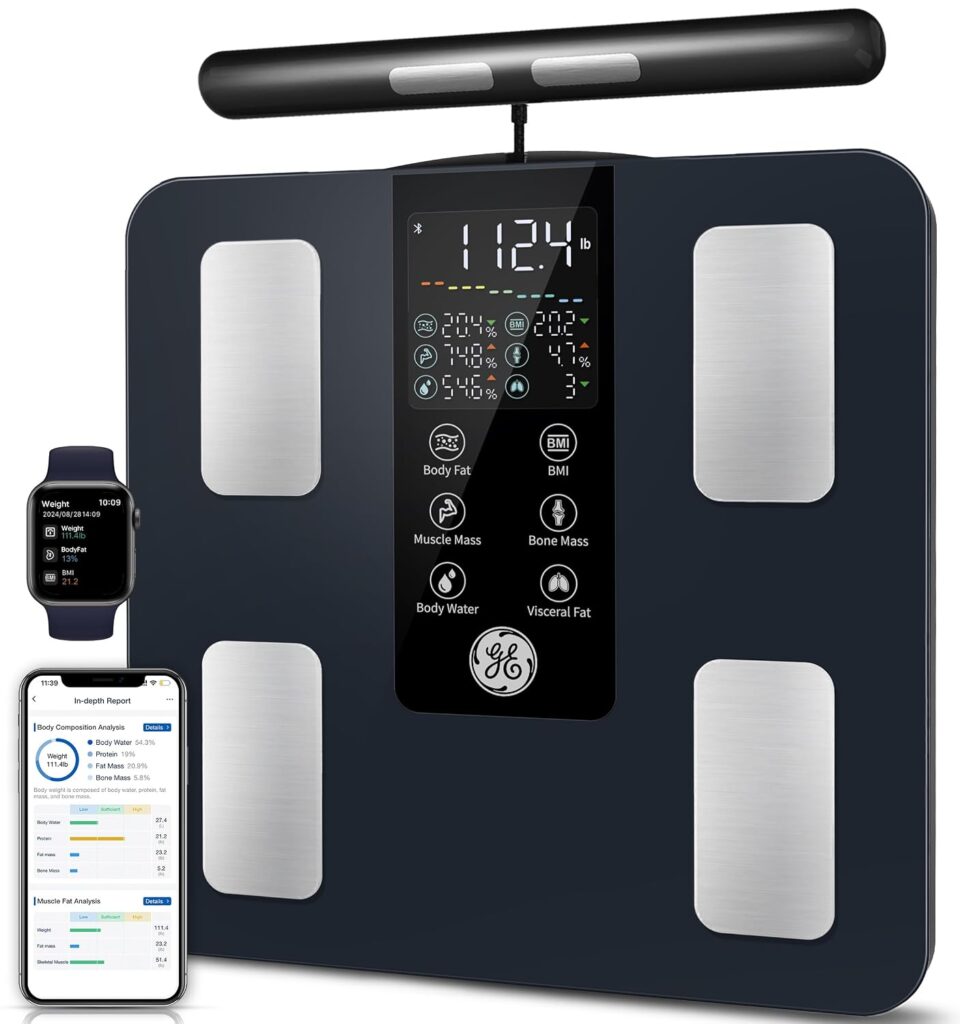
The metric list is extensive. Beyond weight, the GE body fat scale measures BMI, body fat, muscle mass, body water, bone mass, protein, visceral fat, BMR, skeletal muscle, subcutaneous fat, fat-free body weight, and metabolic age, among others. The product information states there are 50 body composition metrics in total, covering fitness and health indicators rather than weight alone.
One of the more practical features is the on-device display. The scale is equipped with an HD LED screen that shows seven key metrics: weight, BMI, body fat, body water, muscle mass, bone mass, and visceral fat. According to the listing, once the Fit Profile app is downloaded and the initial setup is completed, these metrics can be viewed directly on the scale — no need to open the app for every reading. That hands-free approach makes routine check-ins quicker, whether at home or in a gym setting.
App, Tracking, and Sharing
The free Fit Profile app handles the deeper data. It provides detailed charts and saves historical body data so you can follow changes over days, weeks, months, or years. The listing describes setup as easy and notes compatibility with fitness apps including Apple Health, Fitbit, and Google Fit. It also supports sharing body data changes with friends and family.
Because composition data fluctuates naturally, the historical view is arguably the most useful part of the package. A single reading can be misleading; a chart spanning months is where trends become visible. The app is where that longer view lives, while the scale display covers the day-to-day numbers.
Multi-User Support
The scale supports unlimited users, with up to nine profiles that can be created. It instantly recognizes the user when they step on, according to the product information. For households where several people track their health, or for fitness groups, that automatic recognition removes the friction of manually selecting a profile before each weigh-in. The combination of a large platform and multi-user recognition points to shared use as a deliberate design goal.
Accuracy, Calibration, and Important Precautions
The listing is refreshingly direct about what this technology can and cannot do. The data provided by the BIA technology is intended solely for long-term trend tracking and should not be considered equivalent to DEXA or professional medical body composition analysis. Inherent estimation errors may occur. In other words, treat the numbers as directional signals over time, not as clinical measurements.
There is also a calibration note. If you notice a significant weight discrepancy, it may be because the scale was not calibrated to zero before use. The suggested fix is to step on the scale, step off, wait until it displays zero, and then take the measurement.
Most importantly, the product carries a clear safety warning: do not use it if you have a pacemaker or any other internal medical device, or if you are pregnant. This is a standard restriction for bioelectrical impedance devices, since they pass a small current through the body, and it should be taken seriously.
Who Is This Scale Best For?
Based on the stated features, this scale suits people who want more than a weight reading and are willing to track changes over time. The 50+ metrics, segmented analysis, and app-based history make it a fit for fitness-focused users monitoring body fat, muscle mass, and related trends. The nine-profile limit and automatic user recognition make it practical for families and shared training environments, which the listing explicitly names as intended settings. The seven on-screen metrics also help anyone who prefers seeing key numbers without reaching for a phone.
It is not intended for anyone with a pacemaker or other internal medical device, or for pregnant users. And anyone seeking clinical-grade body composition analysis should note the product’s own caution that BIA data is for trend tracking, not a DEXA equivalent.
Final Verdict
The GE Smart Scale for Body Weight positions itself as a comprehensive composition tracker rather than a simple scale. Its eight-electrode, dual-frequency, segmental BIA design underpins a metric list that runs past 50 measurements, while the HD LED display surfaces seven of the most-watched numbers without requiring the app. The free Fit Profile app adds charts, historical storage, and compatibility with Apple Health, Fitbit, and Google Fit, plus data sharing. Unlimited users with up to nine profiles and automatic recognition round out a package clearly aimed at households and fitness groups.
The caveats are stated plainly by the manufacturer: results are estimates for long-term trend tracking, not medical-grade analysis, and calibration matters for accurate weight readings. The safety warning for pacemakers, internal medical devices, and pregnancy is non-negotiable. Within those boundaries, this is a thoughtfully specified smart scale for anyone who wants a broader, ongoing view of body composition — provided they read the numbers as trends rather than verdicts.