
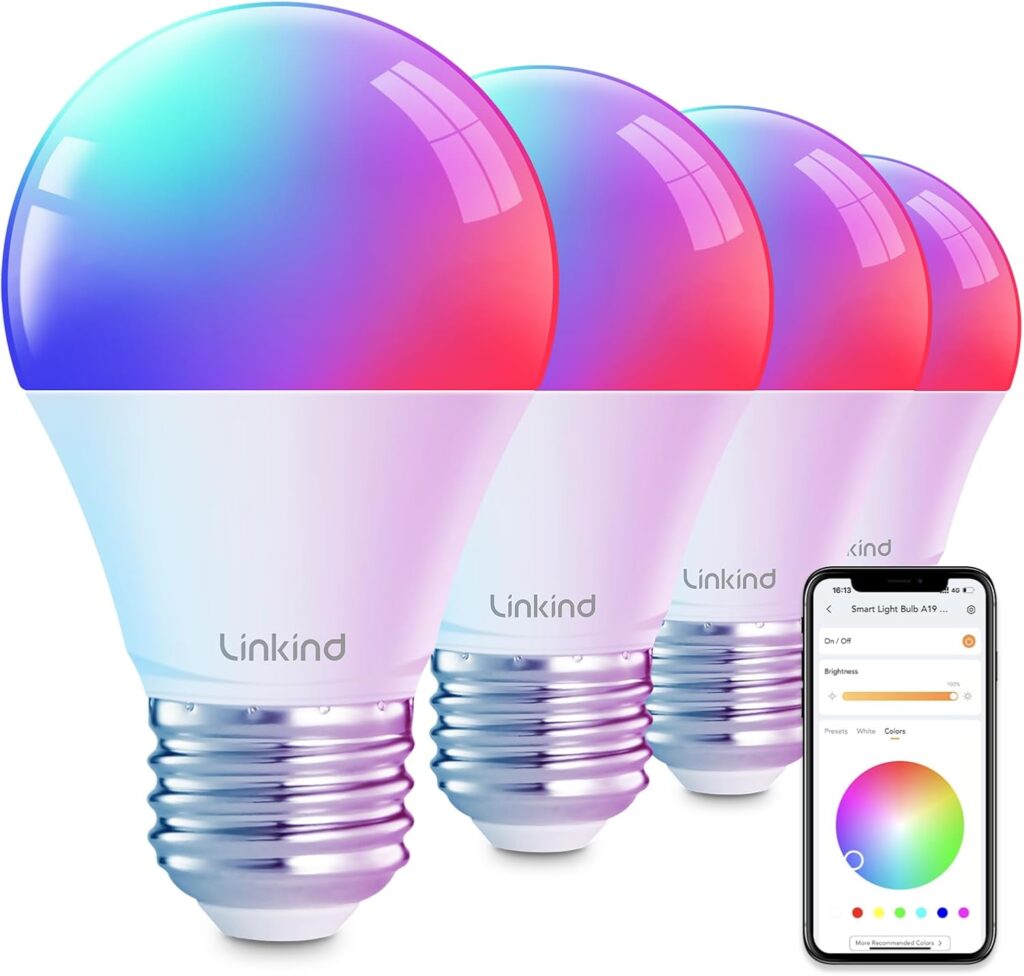


Linkind Smart Light Bulbs: Voice-Controlled Color for the Connected Home
Smart lighting has moved well beyond the simple novelty of turning a lamp on with a phone. Today’s bulbs are expected to respond to voice commands, shift color to match a mood, and slot into a broader connected-home routine without demanding a separate hub or a complicated installation process. The Linkind Smart Light Bulbs, which work with Alexa, Google Home, and the AiDot app, are positioned squarely in that space. This review walks through what the product information actually says about how these bulbs are designed, what they can do, and where they may fit into daily life.
Design and Setup Approach
These are E26 smart bulbs, meaning they are built for the standard screw-in socket format common in many homes. The product information does not detail the physical materials or the exact dimensions of the bulb, so those specifics are left open. What is clear is that Linkind has designed the setup around app-based control rather than a dedicated hub.
According to the supplied information, getting started involves three steps: download the AiDot app, integrate it with Alexa or Google Home, and then link the bulbs to those voice assistants. There is no hub required, which keeps the hardware footprint minimal. The bulbs connect over 2.4GHz WiFi, and the listing notes that initial setup requires both 2.4GHz WiFi and Bluetooth. It also states that 5GHz WiFi is not supported, and that the bulbs operate on 120 voltage. Anyone with a dual-band router will want to confirm the 2.4GHz band is available before setting up.
Features and Technology
The headline capability here is voice control through Alexa and Google Home. The bulbs support spoken commands to turn on or off, adjust brightness, and switch colors. The product information frames this hands-free control as useful for cooking, baby care, or remote work — situations where your hands are occupied or you simply do not want to reach for a phone.
Connectivity is handled through a dual WiFi and Bluetooth arrangement. Linkind describes this as providing uninterrupted control, and states that it is 2x faster than single-connection bulbs. Bluetooth serves as a backup, so control remains available even when WiFi is off — the listing specifically mentions bedrooms or hallways as areas where this can help close connectivity gaps. The claim of faster setup and instant response is presented as a product characteristic rather than an independently verified measurement, so it is worth treating as a stated design goal.
Color and white tone control are central to the experience. The bulbs offer 16 million RGB colors alongside tunable white ranging from 1800K to 6500K. That range allows for warm white for reading, cooler white for movie nights, and dynamic color for parties. The listing also notes a high-color-rendering design intended to restore true colors, which it links to smart home decoration and everyday lighting. Because a single bulb covers both color and tunable white, Linkind positions it as a replacement for multiple single-purpose bulbs.
App Features and Everyday Use
Much of the deeper functionality lives in the AiDot app. Music Sync uses the phone’s microphone to detect rhythm and shifts colors and brightness with the beat. There are four preset modes — Party, Dynamic, Calm, and Auto Rhythm — so you can match the lighting style to the music rather than adjusting manually. The listing describes the rhythm detection as sensitive, with no lag between music and light, which is a stated claim rather than a measured result.
For those who enjoy customization, the DIY tools add another layer. Light Show lets users build custom effects such as swing, loop, ripple, flow, fading, and jumping patterns, with no professional skills required according to the listing. There is also a Chat with Dotis AI feature: saying something like “I need a party mood” or “give me calm vibe” generates a tailored light scene. A Light Lab Community is included for discovering trending designs and sharing creations with other users.
Beyond creative play, the bulbs support 104 preset scenes covering categories such as Festival, Reading, and Sleep. Timer and schedule functions allow the bulb to turn on automatically at dawn — simulating sunrise — and off at night. Group control lets multiple bulbs be managed together, which the listing suggests for living rooms or entire homes.
Connectivity, Compatibility, and Efficiency Notes
Compatibility is straightforward but worth reading carefully. The bulbs work with Alexa and Google Home, connect over 2.4GHz WiFi with Bluetooth backup, and require 120 voltage. They are explicitly not compatible with traditional dimmer switches, and the listing warns that using them with such switches may cause flickering or buzzing. Brightness should instead be adjusted through the app or by voice.
On efficiency, Linkind states that scheduling and automation can reduce energy waste by up to 85% compared with traditional bulbs. The LED design is rated for a 25,000-hour lifespan, which the listing connects to saving on replacement costs. These are manufacturer-stated figures and should be understood as such.
Who Are These Bulbs Best For?
Based on the supplied information, these bulbs suit households already using Alexa or Google Home that want voice-controlled lighting without adding a hub. The hands-free control is explicitly framed around cooking, baby care, and remote work, so anyone in those situations may find the voice commands practical. The music sync and DIY light effects point toward users who host gatherings or enjoy party-style lighting, while the 104 preset scenes and scheduling functions fit everyday routines like reading or winding down. The Bluetooth backup may appeal to anyone who has experienced WiFi dropouts in bedrooms or hallways. Because setup requires 2.4GHz WiFi and 120 voltage, and because dimmer switches are not supported, those with 5GHz-only networks or existing dimmer setups should check compatibility first.
Final Verdict
The Linkind Smart Light Bulbs pack a broad feature set into a hub-free package: Alexa and Google Home voice control, dual WiFi and Bluetooth connectivity, 16 million colors, tunable white from 1800K to 6500K, music sync, DIY light effects, 104 preset scenes, and scheduling. The AiDot app adds creative tools like Light Show and the Dotis AI chat feature, which go beyond basic on-off control. The main considerations are the fixed requirements: 2.4GHz WiFi for setup, 120 voltage, and no support for traditional dimmer switches. For anyone already invested in Alexa or Google Home and looking for color-changing bulbs with deep app-based customization, this product is designed to deliver exactly that — provided the network and wiring requirements line up with your home.