

3-in-1 Pasta Maker: A Closer Look at the 9-Setting Dough Roller and Cutter Set
Making fresh pasta at home is one of those kitchen projects that sounds intimidating until you actually have the right tool in front of you. The 3-in-1 Pasta Maker with 9 thickness settings and two size cutters is designed to bring the rolling, thinning, and cutting stages of pasta-making into a single countertop device. Rather than juggling a rolling pin and a knife, this unit consolidates the core steps into one machine, which is the central idea behind its “3-in-1” label.
This review walks through what the product actually offers based on its stated specifications, what each feature means in practical terms, and who might find it a sensible addition to their kitchen. It focuses on the design, the thickness and cutting options, and the way those elements work together, without overstating what the tool can do.
Design and Build Concept
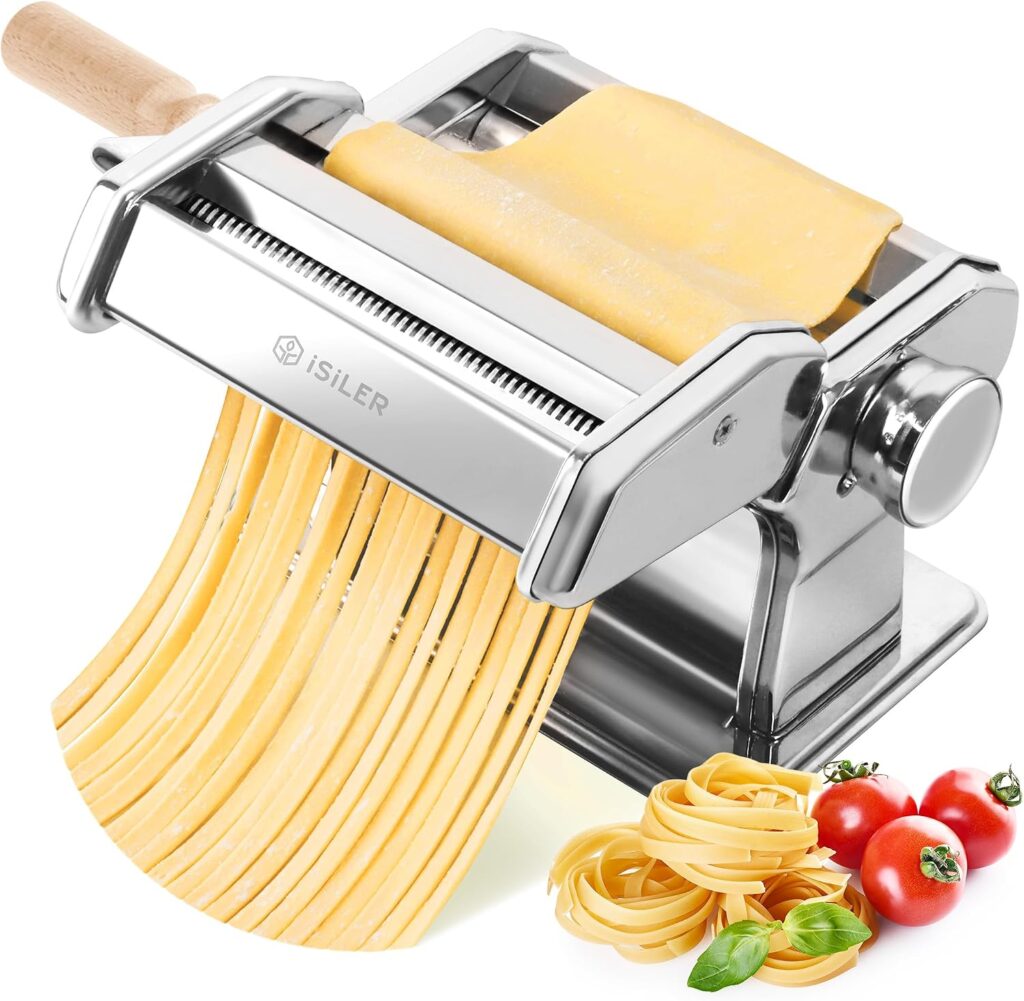
The name of this pasta maker tells you most of what you need to know about its structure. It combines dough rollers with two cutters, and it offers nine distinct thickness settings. That combination is what earns it the “3-in-1” description: rolling, adjusting thickness, and cutting are all handled by the same piece of equipment.
A countertop pasta machine of this type typically clamps or sits at the edge of a work surface, and the rollers are turned to feed dough through. The nine thickness settings are the adjustable part of the design. Each setting represents a different gap between the rollers, so the same sheet of dough can be passed through repeatedly, moving from a thicker setting to a thinner one until it reaches the desired thickness. This is the standard way roller-style pasta makers operate, and the nine-setting range gives the user a graduated series of options rather than a simple thick-or-thin choice.
The two cutters are the second functional element. Having two cutter sizes means the machine can produce two different widths or shapes of pasta from the same sheet of dough. The exact widths are not specified in the supplied information, so it is best to treat the two cutters as offering two distinct size options rather than assuming particular pasta types.
Features and How They Work Together
The most important feature to understand is the nine thickness settings, because thickness affects nearly everything else about the finished pasta. A thicker sheet suits some shapes and a thinner sheet suits others, and the ability to step gradually through the settings lets the dough be worked down in stages rather than forced through a single narrow gap. That gradual approach is generally easier on the dough and on the machine than trying to thin a sheet in one pass.
The two cutters extend that flexibility. Once a sheet has been rolled to the desired thickness, it can be fed through a cutter to produce strands or shapes of a given size. Because there are two cutters, the same sheet can yield two different results depending on which cutter is used. This is where the “3-in-1” idea becomes practical: roll, adjust, and cut, all with one device.
- Nine thickness settings for graduated rolling of dough sheets
- Dough rollers for flattening and thinning pasta dough
- Two cutters for producing two different pasta sizes
- Combined rolling and cutting functions in a single unit
What the specifications do not state is the material of the rollers or body, the exact cutter widths, whether a clamp or hand-crank is included, or how the machine is cleaned. Those details are simply not part of the supplied information, so they are left open here rather than guessed at.
Performance and Everyday Experience
In everyday use, a pasta maker like this is about repetition and control. The process is straightforward: prepare dough, feed it through the rollers at a wider setting, then narrow the gap step by step until the sheet reaches the thickness you want. The nine settings give a clear progression to work through, and the two cutters finish the job by turning sheets into cut pasta.
The practical value of multiple thickness settings is that one machine can handle different pasta styles rather than locking you into a single result. Thicker sheets and thinner sheets both become possible, and the two cutters add another layer of variety. For someone who makes pasta regularly, that range is the main draw. For someone who makes it occasionally, the appeal is having the rolling and cutting steps handled without separate tools.
Because the supplied information does not include performance claims, motor specifications, or output rates, this review does not assert how quickly or how smoothly the machine operates. What can be said is that the design is built around manual, staged rolling and cutting, which is the conventional approach for this category of pasta maker.
Compatibility and Use Considerations
This is a dough-handling tool, so its compatibility is with pasta dough rather than with digital devices or power sources. There is no battery, no connectivity, and no app involved. It is a manual kitchen device, and its usefulness depends on the dough you feed it and the thickness and cutter settings you choose.
One reasonable point to keep in mind is that the nine thickness settings and two cutters define the range of results. If a particular pasta shape or width is not covered by the two cutters, the machine will not produce it. The specifications do not list the cutter sizes, so anyone with a specific width in mind should confirm that detail before relying on this model to deliver it.
Who Is This Pasta Maker Best For?
Based on the stated features, this 3-in-1 pasta maker suits home cooks who want to make fresh pasta from dough and prefer a single device that handles rolling, thickness adjustment, and cutting. The nine thickness settings are useful for anyone who likes to vary the thickness of their pasta sheets, and the two cutters add a degree of variety without requiring separate cutting tools.
It is also a reasonable fit for someone who is setting up a home pasta routine and wants the core functions in one unit rather than buying a roller and cutters separately. Because the machine is manual and dough-focused, it is not aimed at anyone looking for an electric or automated appliance, and the supplied information gives no indication that it is.
Final Verdict
The 3-in-1 Pasta Maker is a focused kitchen tool built around three connected tasks: rolling dough, adjusting thickness across nine settings, and cutting with two cutter sizes. That combination is what defines the product, and it is the reason the “3-in-1” label makes sense. The design keeps the pasta-making process in one place, which is convenient for anyone who makes fresh pasta and wants control over thickness and cut size.
The main limitation is simply the information available. Details such as materials, cutter widths, and cleaning method are not specified, so buyers with specific requirements should verify those points. Taken on its stated features alone, this pasta maker offers a graduated thickness range and two cutting options in a single unit, which is a practical setup for home pasta-making.